









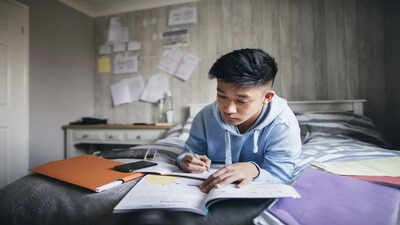

In 2013, a team of psychologists led by John Dunlosky of Kent State University put a question to the habits most students never examine: do they work? The group reviewed ten learning techniques in the journal Psychological Science in the Public Interest. Practice testing and distributed practice received the highest utility rating, while summarisation, highlighting, underlining and rereading, among the most common student habits, rated low.The finding points to a principle that runs through the research. Memory responds to effort at the moment of recall, not to repeated exposure. The six methods below follow from that principle.1. Test yourself instead of rereadingIn a 2006 study in Psychological Science, Henry Roediger and Jeffrey Karpicke of Washington University in St. Louis compared taking a test after a first reading with simply rereading the passage. Rereading produced better results on a test five minutes later, but a week later the pattern reversed: the more retrieval practice, the better the recall. Later work found retrieval practice outperformed concept mapping. As Karpicke put it, “Testing is not just an assessment of what you studied.”In practice, close the book after a chapter, write down everything that can be recalled, then check the gaps.2. Space sessions across daysA 2006 meta-analysis in Psychological Bulletin by Nicholas Cepeda and colleagues covered 839 assessments of distributed practice in 317 experiments across 184 articles. It found that the gap between study sessions that produced the best retention grew as the required retention period grew. A student preparing for an examination months away therefore benefits from wider gaps than one preparing for next week’s test.A topic revisited after a day, a week and a month will outlast the same hours spent in a single night.3. Mix topics within a sessionInterleaved practice means arranging an assignment so that no two consecutive problems need the same strategy. A 2020 trial in the Journal of Educational Psychology by Doug Rohrer and colleagues tested this at scale. Fifty-four seventh-grade mathematics classes completed interleaved or blocked assignments over four months. On an unannounced test a month later, the interleaved group scored 61 per cent against 38 per cent.The evidence is strongest in mathematics. The Dunlosky review rated the technique moderate, as the research base was still small.4. Ask why a fact is trueElaborative interrogation means generating an explanation for why an explicitly stated fact or concept is true. It works by integrating new information with prior knowledge. A history student who reads that a treaty was signed should ask why the signatories agreed to it.It has limits. It applies best to discrete factual statements, and benefits may be smaller for learners with little knowledge of the subject.5. Explain the steps aloudSelf-explanation is explaining how new information relates to what is already known, or explaining the steps taken in solving a problem. Explaining during the task proved better than explaining afterwards, though the method takes time and some students need guidance.A student solving a numerical problem should state why each step follows from the last.6. Sleep soon after studyingSleep sits outside Dunlosky’s list of ten, yet the evidence suggests it protects what the other methods build. In a 2006 study in Learning & Memory, Steffen Gais, Brian Lucas and Jan Born examined high school students’ recall of vocabulary. They found that recall improved when sleep followed learning. One experiment compared learning in the evening, with sleep within hours, against learning in the morning followed by more than fourteen hours awake.The all-night revision session works against the way memory consolidates.
What the evidence does not promise
Dunlosky and colleagues were careful on this point. They noted the techniques are not a panacea and benefit only students who are motivated and capable of using them. The methods demand more effort per hour than highlighting does. That effort is what makes them work.Dunlosky has put the practical lesson simply: “By just replacing rereading with delayed retrieval practice, students would benefit.”In other words, the most reliable route to remembering more in less time is to stop reviewing passively and start retrieving actively, on a schedule, with sleep in between.
About The Author