












James Talarico‘s historic victory in Texas and El Said in Michigan: A referendum on Trump‘s leadership, US foreign policy, Gaza and fracture in MAGA coalition “We just proved that all the money in the world is no match for the people of Texas.” James Talarico’s victory speech captured the political significance of the 2026 American mid- term elections. He defeating Republican Ken Paxton, who reportedly burned $316 million in Texas campaign, was more than an electoral upset. It symbolised the return of issues of ordinary citizens during campaigns, media and political communications, increasingly dominated by propaganda and wealth.In the language of Antonio Gramsci, this may be akin to a subaltern upsurge where workers, struggling families, and communities exercised their political agency irrespective of dominant cultural discourse, and demanded, that politics address their lived realities, rather than foreign policy mirages. Moody’s Analytics, Mark Zandi, as reported, by Associated Press, estimated mid-October that Iran war has cost the average US household almost $2,000, including $1,100 in higher energy prices, and $540 in higher interest rates along with $360 in military costs.
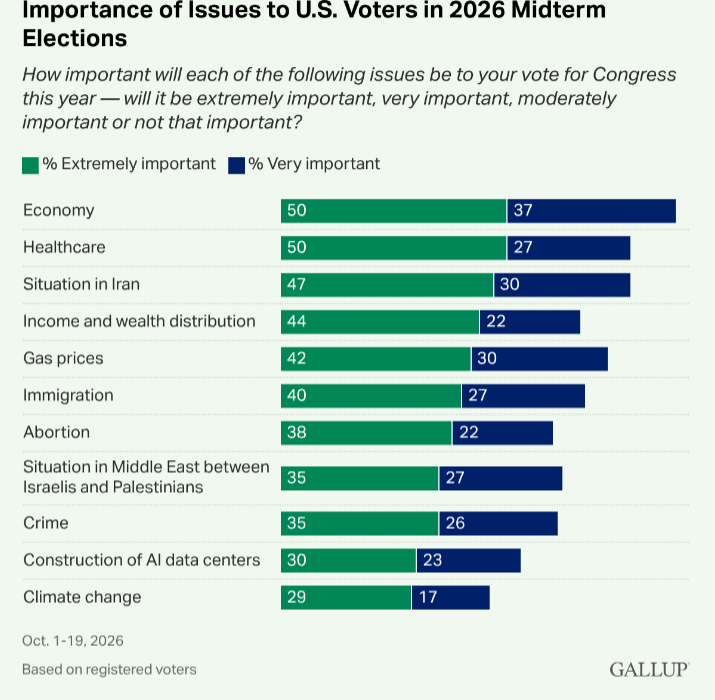
Importance of issues to US voters
The election also exposed the myth of permanent political dominance. President Donald Trump’s 2024 victory had created an impression of an enduring Republican mandate, but, two years later, voters demonstrated that electoral loyalty is conditional.The 2026 elections offer a compelling case study of that possibility. The elections also became a referendum on Trump’s foreign policy, particularly the Iran war, America’s relationship with Israel and the humanitarian catastrophe in Gaza.
A referendum on Trump’s leadership and foreign policy
The Democratic breakthrough extended beyond Texas, changing control of both chambers of Congress and weakening Trump’s political authority.Perhaps the most revealing post-election development was Vice-President JD Vance‘s admission that the Iran war contributed to Republican losses. He tweeted on X that some voters who supported Trump in 2024 had switched to Democrats, an indication of fragmentation in MAGA vote base, because they wanted an end to the war, relief from inflation, an America-first foreign policy and a change in Washington’s relationship with Israel.His blunt assessment was: “The reason we lost is the war.”Public opinion figures reinforced the anti-war argument. A September 2026 Marquette Law School survey found that 87% of Americans believed the United States had not achieved its objectives in the Iran war, while 79% said the war was not worth its cost. Only 21% considered it worth the price. Israel too became unpopular with 59% respondents viewing it unfavourably.A Data for Progress survey found that 59% respondents disapproved of Trump’s handling of the Israel–Palestine conflict, compared with 35% who approved. These figures suggest that dissatisfaction with the administration’s West Asia policy.
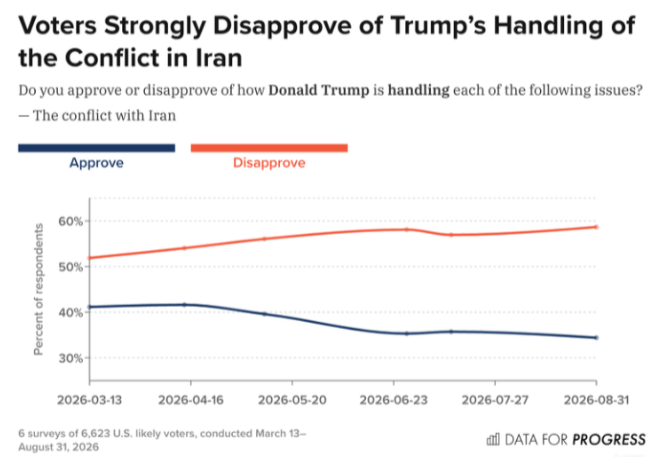
Trump’s handling of Iran conflict
The Gaza issue was particularly important among Muslim Americans. A CAIR–Community Pulse exit survey of 522 Muslim registered voters found that 80% said Gaza genocide was a major influence on their vote. About 76% identified Palestinian human rights among their most important issues. Another 80% said the economy was a major influence on their vote. These data concern Muslim respondents, not the entire electorate, even as, it demonstrates, how humanitarian crisis, where, as per UN, over 20,000 children have been killed by Israel, became politically significant.
Indian Americans and Gaza: Concern beyond religious identity
Importantly, concern about Palestinian suffering was not confined to Muslim and Arab American communities. A 2024 Indian American Attitudes Survey conducted by the Carnegie Endowment found that 35% of respondents sympathised mostly or entirely with Palestinians, compared with 29% who sympathised with Israelis; 24% expressed equal sympathy.Among Indian American Democrats, Palestinian sympathy reached 45%, compared with 30% among Republicans. Furthermore, 40% believed that the then US administration is tilted towards Israel. These findings demonstrate that concern about Gaza crossed religious and ethnic boundaries. Indian Americans, too engaged in the debate over American foreign policy, and were not averse to Palestinian human rights violations, post October 7 Hamas raid, that killed 1,200 Israelis. The survey predates the 2026 election, so it does not establish how Indian Americans voted the midterms, though, it explains a wider shift in attitudes.
Coalition of Christians, Jews, religiously unaffiliated, and Muslims: A new expression of American pluralism elected El-Sayed
Michigan, with only 2.4 per cent Muslim voters, made history by electing Abdul El-Sayed, the first Muslim elected to the US Senate. His victory with 52.5% of votes was significant amid debates about immigration, Islamophobia, Israel and Palestine. Majority of Jewish Americans (1%), Christians (61%-65%) and religiously unaffiliated (32%) voted for El-Sayed, an ardent supporter of Palestinian cause. Some estimates say that 60 per cent of early Jewish voters favoured him, and debunked the existing cultural hegemonic narrative pertaining to Jews and Muslims.
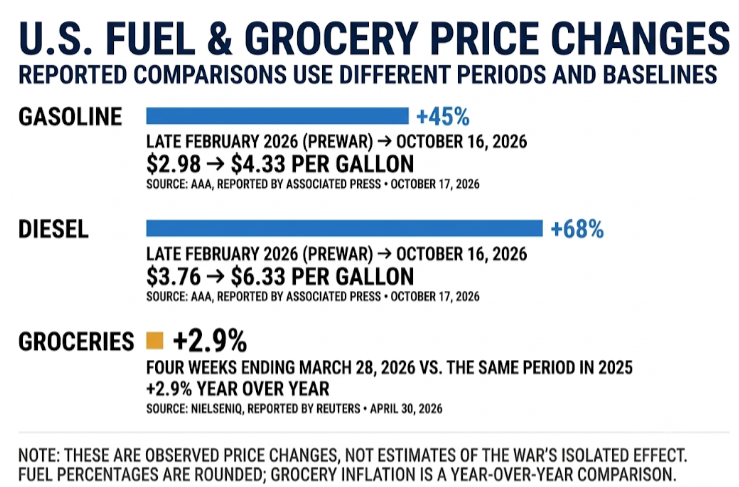
Fuel and grocery price changes
“You took a chance on the unlikeliest of candidates,” El-Sayed told the crowd in his election night speech, reported The Guardian. “You welcomed me in your homes, your churches, your synagogues,” even as President Trump, called him “Jihadist and lunatic” during the campaign. El-Sayed said his political opponents, instead of addressing the cost of gas and groceries, chose to be divisive.
An imperfect democracy, but United States is an enduring inspiration!
American democracy has its own set of challenges, like billionaire influence, racial inequalities, and political polarisation. But, its constitutional institutions provide mechanisms for fair political competition.The polls demonstrated why these institutions matter. A President cannot automatically guarantee victory for his party. Citizens, through mechanisms like mid-term, can challenge their government without waiting for another presidential election.Many democracies across Asia, Europe and elsewhere have valuable constitutional traditions. America has no monopoly, but, its system remains an example of how electoral competition and constitutional checks can check autocratic power.The polls, further, demonstrated that foreign policy is also under democratic scrutiny. Citizens have the right to question how their government spends national resources and flaunt and project military power abroad.
Disclaimer: Views expressed above are the author’s own.
About The Author