








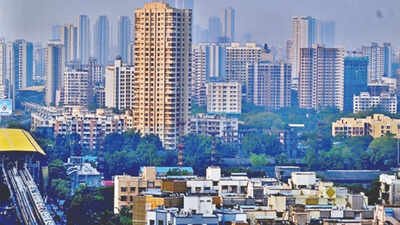
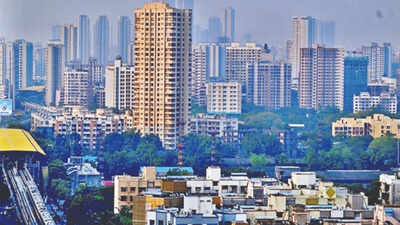
MUMBAI: Once known primarily as a residential suburb, Goregaon is gradually acquiring a new identity. Better road and Metro connectivity, large-scale redevelopment and the growth of commercial centres are changing the way people live and work here. The suburb is increasingly emerging as a mix of residential neighbourhoods, business districts and retail destinations, say real estate experts.Redevelopment of housing societies has gathered pace in both Goregaon East and West, as a shortage of available land pushes the suburb towards urban renewal. Hundreds of societies, many housed in ageing buildings dating back to the 1960s and 1970s, are opting for redevelopment.Nikhil Bhatia, managing director and co-head of capital markets at CBRE India, said, “Large redevelopment initiatives, including MHADA’s Motilal Nagar enclave, are reinforcing Goregaon’s transformation.”A major connectivity boost is expected from the 12.2-km Goregaon-Mulund Link Road (GMLR), which will connect the Western and Eastern Express Highways through twin tunnels beneath Sanjay Gandhi National Park. The project is expected to cut travel time between Goregaon and Mulund substantially. Another major project, the proposed Versova-Bhayander coastal road, is expected to improve north-south connectivity across the western suburbs, with a planned connector near Mindspace in Malad linking it to GMLR.Metro connectivity is expanding too. Operational Metro Line 2A connects Goregaon with Andheri, Malad, Kandivli and Dahisar. Upcoming Lines 2B and 6 are expected to improve access to BKC, Powai and the eastern suburbs, while extensions of Line 7 towards Mira-Bhayandar and the airport are planned. Together with Goregaon and Ram Mandir railway stations, these links are expected to strengthen the suburb’s connectivity with different parts of Mumbai.Improved connectivity is also supporting the growth of commercial activity. Business districts and employment centres such as Mindspace, NESCO, Nirlon Knowledge Park and Film City, along with the Oshiwara Development Corridor, are helping create a mix of offices, homes, shopping and leisure destinations.Developers and property brokers say demand is being supported by connectivity, social infrastructure and proximity to employment centres. Gagan Mehta, director at AGM Vijaylaxmi Group, said, “Goregaon’s appeal has widened beyond its traditional catchment areas. We are seeing interest from homebuyers in neighbouring areas such as Jogeshwari, Malad and Kandivali.”Residential market data covering projects launched between Q1 2022 and Q3 2026 shows that property prices have risen substantially in both parts of Goregaon.In Goregaon East, the weighted average selling price rose from Rs 26,831 per sq ft of carpet area in 2022 to Rs 40,430 in 2026, an increase of around 51%. In Goregaon West, it went up from Rs 23,926 to Rs 32,944 during the same period, a rise of around 38%.Knight Frank’s Gulam Zia said, “Goregaon’s property market remained resilient even when east-west connectivity was largely limited to two flyovers and the Metro had only recently opened. Much of the planned infrastructure is still in the pipeline, but demand is likely to grow even without these projects.”The two markets have also seen different patterns in new housing supply and sales. Goregaon East recorded 767 apartment launches in 2025, of which 348 had been absorbed. In Goregaon West, 1,323 apartments were launched and 899 were absorbed. In 2026, up to Q3, Goregaon East recorded 241 launches and 35 absorptions, while Goregaon West saw 1,333 launches and 424 absorptions.The figures point to a considerably larger supply pipeline in Goregaon West, where launches have also outpaced sales. In Goregaon East, the gap between launches and absorptions widened in the first nine months of 2026. Absorption refers to cumulative sales from homes launched in the respective year, as recorded in the dataset.Ram Naik, co-founder and CEO of The Guardians Real Estate Advisory, said, “Goregaon’s growth is becoming increasingly differentiated across its micro-markets. The east is emerging as a stronger commercial and employment destination, while the west continues to benefit from established residential demand, retail infrastructure and redevelopment.”However, the pace of redevelopment and rising population density have also raised concerns. “Construction in Goregaon has gone unchecked. There are serious questions about whether the city’s urban environment can absorb further high-density development. Developers wield excessive influence, and there are insufficient checks on the construction of tall buildings,” said activist Zoru Bathena.Redevelopment can help replace Goregaon’s ageing housing stock, but higher population density can put considerable pressure on drainage, roads, open spaces and public amenities, said activist Anil Galgali. “Rising property prices could also make homeownership increasingly difficult for some buyers.” A Mhada official said the scale of transformation requires coordinated planning. “Cluster redevelopment can integrate amenities and infrastructure more effectively than individual projects.“
About The Author