










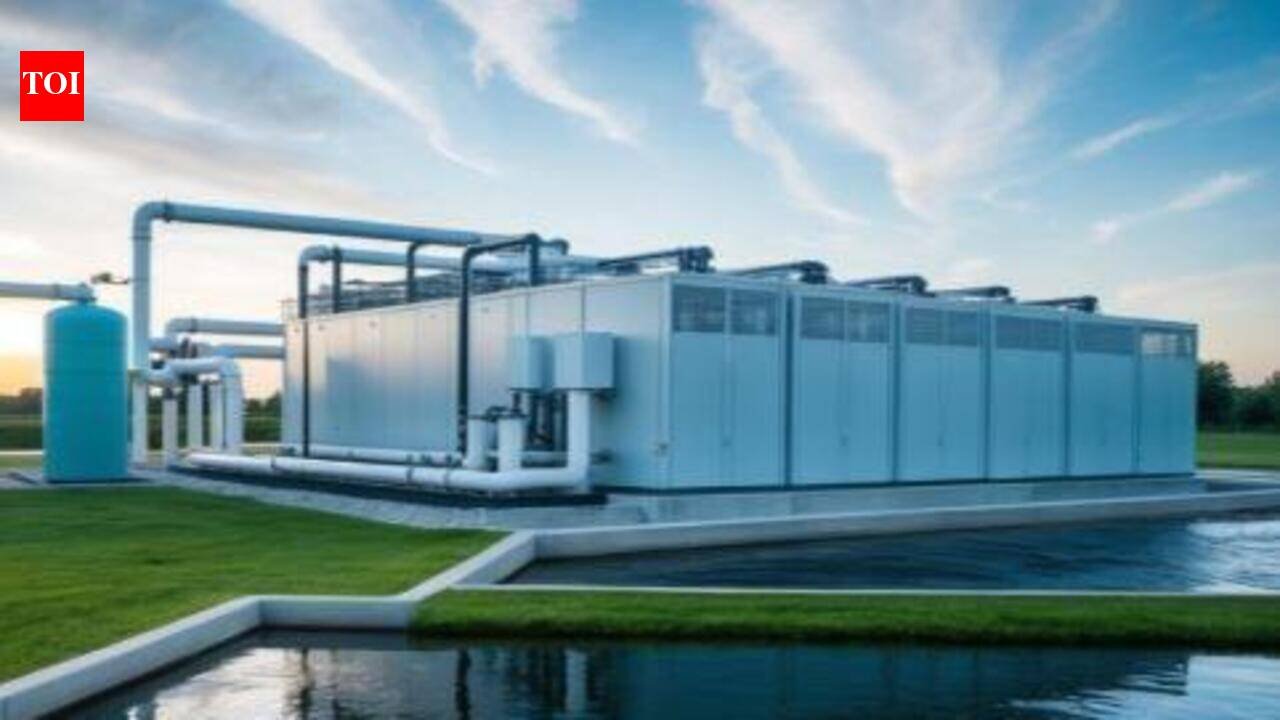
Patna: Patna’s artificial intelligence (AI) data centre may soon get a dedicated supply of treated wastewater from Digha Sewage Treatment Plant (STP) to meet its extensive cooling requirements. A proposal has been sent to Bihar Urban Infrastructure Development Corporation (Buidco) to provide around 10 lakh litres of treated water daily to the facility at Patliputra Industrial Area.The proposed arrangement aims to reduce the data centre’s dependence on fresh water while ensuring the sustainable utilisation of treated sewage water. However, the final decision on the proposal is yet to be taken.The AI data centre will have an IT load capacity of 12 MW. It will house high-performance computing systems required to operate artificial intelligence applications, ChatGPT-like tools and other data-intensive services. These machines generate substantial heat while operating continuously, making efficient cooling systems essential for their uninterrupted functioning.Maintaining the temperature of servers requires considerable resources, particularly electricity and water. The data centre will therefore need a regular supply of water to operate its cooling infrastructure. According to the proposal, treated water from Digha STP could meet this requirement without putting additional pressure on the city’s freshwater resources.Digha STP has a total treatment capacity of 100 million litres per day (MLD), of which around 60-70 MLD is currently being treated. The treated water is discharged into Ganga. Its availability is expected to increase further after additional drainage channels are connected to the plant. Diverting a portion of this treated water to the AI data centre could provide an alternative industrial water source while promoting wastewater recycling.The amount of water consumed by the facility will also depend on the cooling technology installed. Data centres generally use two types of cooling systems. In a closed-loop system, water circulates continuously through a network of pipes and cooling equipment. Once the system is filled, the same water can be reused for months or even years, although the arrangement generally consumes more electricity.An open-loop cooling system, on the other hand, relies on evaporation to remove heat. As water evaporates during the process, additional water has to be supplied regularly. While this system generally requires less electricity, its water consumption is considerably higher.The proposed supply of 10 lakh litres daily is expected to address the facility’s substantial cooling needs. Apart from regular consumption, a considerable quantity of water will also be required initially to fill the cooling network. The initial requirement could be around one lakh litres.As the data centre expands its capacity in the coming years, its water requirements may also rise. The proposed arrangement with Digha STP could help meet this additional demand through recycled water rather than increasing dependence on fresh water.
About The Author