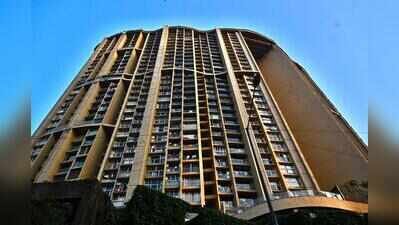










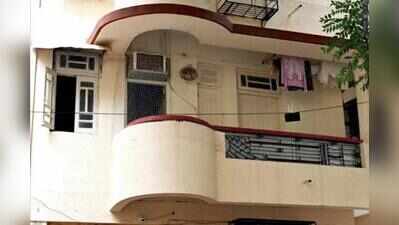
For most of his life, 36-year-old Mohsin Mulla has enjoyed hanging out in the verandah of his small flat on the top floor of an old Mazgaon building. He could step out with a cup of tea, gaze up at the sky or down at the street, and take a private call. But a year ago, his building was demolished. His temporary digs don’t have a balcony, and neither will the flat he’ll get in his redeveloped building.“The balcony is a luxury now,” he says. Once a common feature of Mumbai housing, the balcony has largely vanished from middle-class buildings, due to a 2012 rule change that brought them into floor space index (FSI) calculations, making them an officially chargeable area. While the change was intended to end malpractice—homeowners enclosed the open area and builders charged buyers for FSI-free space—it also turned the balcony into an expensive extra in a city of sky-high real-estate prices.“The rule changed the calculus of providing balconies for most new tall buildings, leaving them out or reducing them to mere ledges,” says senior architect Moayyed Fatehi. Meanwhile, the outdoor space is now marketed as a premium amenity—called ‘decks’, ‘skydecks’, or terraces, depending on size and design—to woo buyers of prime upper-floor flats or units in luxury complexes.While there has been some post-pandemic pushback—some builders now offer balcony options in small homes—for the most part, Fatehi says, “small flats need balconies the most but get them least.”Designed for heatHistorically, balconies were an important climate-responsive feature in a dense tropical city. They reduce heat entering the home—the wall-size glass windows in new towers do just the opposite—and offer a sense of open space in a city without enough parks. They can be seen in buildings across eras, from the wooden balconies of East Indian homes to the galleries of early twentieth-century chawls. Reinforced cement concrete enabled deeper cantilevered balconies in 1940s Art Deco apartments, notes Fatehi, a feature retained in early high-rises of the 1970s and ’80s.By then, balconies had become spaces of contentious regulation. “There’s been a lot of flip and flop on balcony rules,” says veteran liaison architect Manoj Daisaria. He recalls that balconies were once allowed to run the length of a room but were restricted to half that length in the 1970s to prevent enclosures. Authorities tried to include balconies in FSI in the mid-1970s but the effort failed, and they remained exempt up to 10% of floor area until 2012. (See timeline.)Since the rule change, architects have struggled to persuade developers to offer balconies in smaller flats. “Buyers of flats of 350-450 square feet cannot really afford a balcony per today’s real estate prices,” says architect Vilas Nagalkar. “Beyond 800-1000-sq-ft, you’re more likely to see them.”He and other architects estimate that only 20% of new projects offer balconies, and these tend to be in larger suburban complexes. “There’s more scope for planning in large layouts, and prices are not as high as the island city,” says Nagalkar.Post-pandemic shiftDemand for balcony apartments has grown since the COVID-19 pandemic, when people came to value being able to step outside their box. In the lockdown, “we noticed our tiny balcony homes sold faster than others,” says Khushbu Davda, architect and co-founder of Studio Emergence, adding,“Builders caught on quickly.”The shift can be seen in Mulla’s redevelopment project in Mazgaon. While Mulla won’t get a balcony in his rehab flat, the project offers sale flats of 500-sq-ft with a small balcony—-something that wasn’t part of older projects. Similarly, in Runwal Forest, an eleven-tower complex rising in Kanjur Marg, 2BHKs are offered both with and without 40-sq-ft balconies—for a price difference of over Rs 10 lakh.Davda’s firm tries to include balconies in its designs, using an angular facade to provide 35-sq-ft balconies in some stand-alone buildings. “It’s tiny but it’s something,” she says. They even designed a commercial building with a balcony, for workers to take a break. “We were able to show that it serves a bigger purpose than just floor space inside,” she says.In high-rises, balconies can be difficult to maintain against the assault of wind, dust, and pigeons, but Fatehi says good design can reduce those issues. Davda believes the BMC should incentivise balconies again. Builders once notorious for misusing free-of-FSI spaces have mostly fallen in line with the new rules, she notes. Some have also become particular about uniform facades, making illegal alterations less likely.If the BMC doesn’t want to fully exempt balconies from FSI, says Davda, it could count them as half FSI—to make the outdoor space cheaper than the indoor. “Even that would help,” she says. “Balconies can come back.”
About The Author