











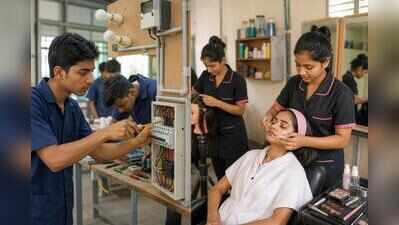
Dharwad: Karnataka’s decision to introduce vocational education in govt schools from class 6 has sparked debate over whether early job-oriented training could come at the expense of academic development, particularly for students from economically weaker backgrounds.The initiative covers electrical work, plumbing, beauty and wellness, agriculture and horticulture. The govt says nearly 40% of students drop out at the SSLC and pre-university levels and struggle to find jobs for lack of vocational skills.Equipping students with employable skills is a legitimate goal, but job-specific training from class 6 raises concerns about their academic foundations. Students need grounding in mathematics, science, languages and social sciences to develop analytical skills and prepare for higher education. Early specialisation could narrow their aspirations before they explore their interests and abilities.The move also raises questions about educational equity. Children from affluent families are likely to receive a broad academic education in private schools and prepare for higher studies, while govt-school students risk being channelled into vocational streams early, limiting their choices.Several organisations, including the AIDSO Dharwad district committee, oppose the initiative. AIDSO says it could divert poor students from mainstream education and create cheap labour for companies under the banner of skill development.Educationist BS Patil says vocational education should begin at the plus-two stage, after SSLC, when students can choose academic or vocational pathways based on their interests and career aspirations.Karnataka has tried a similar approach before. The state offered a two-year, central govt-sponsored job oriented course (JOC) at select pre-university colleges to teach practical skills and promote self-employment. Recognised as equivalent to PUC, it also allowed graduates to pursue arts and commerce degrees.The Congress govt later discontinued the programme after the Centre withdrew funding. It said the course had failed to meet its goal because most students pursued higher studies rather than self-employment.The initiative has also raised questions about conditions attached to the Rs 2,000-crore results-based loan from the Asian Development Bank for the Karnataka Public Schools scheme.Skill development is essential, but tackling dropouts and unemployment requires stronger govt schools, better access to higher education and meaningful vocational pathways after SSLC.Academic education and skill development should complement each other. Vocational training must broaden students’ opportunities, not limit their choices at an impressionable age.
About The Author