






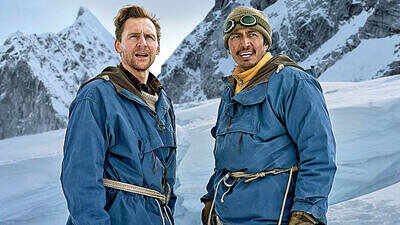
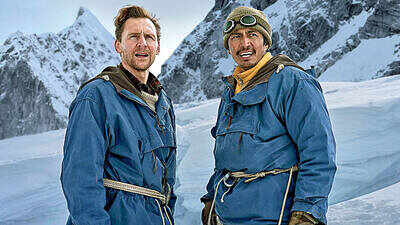
The first ascent of Everest in 1953 has long been told as a story of British achievement. The British expedition and New Zealander Edmund Hillary took the headlines, while Tenzing Norgay, the Tibetan-Nepalese mountaineer who stood beside him on the summit, was cast as the loyal companion. In Tenzing, her first feature film, Australian director Jennifer Peedom reverses the frame.She says,“Everest may be the highest point on Earth, but this film was never only about reaching the top. It was about the long journey there, and the man who had to become himself in order to arrive. It’s a story about identity, belonging, sacrifice, and who gets remembered. Seventy years on, those questions feel anything but historical.”
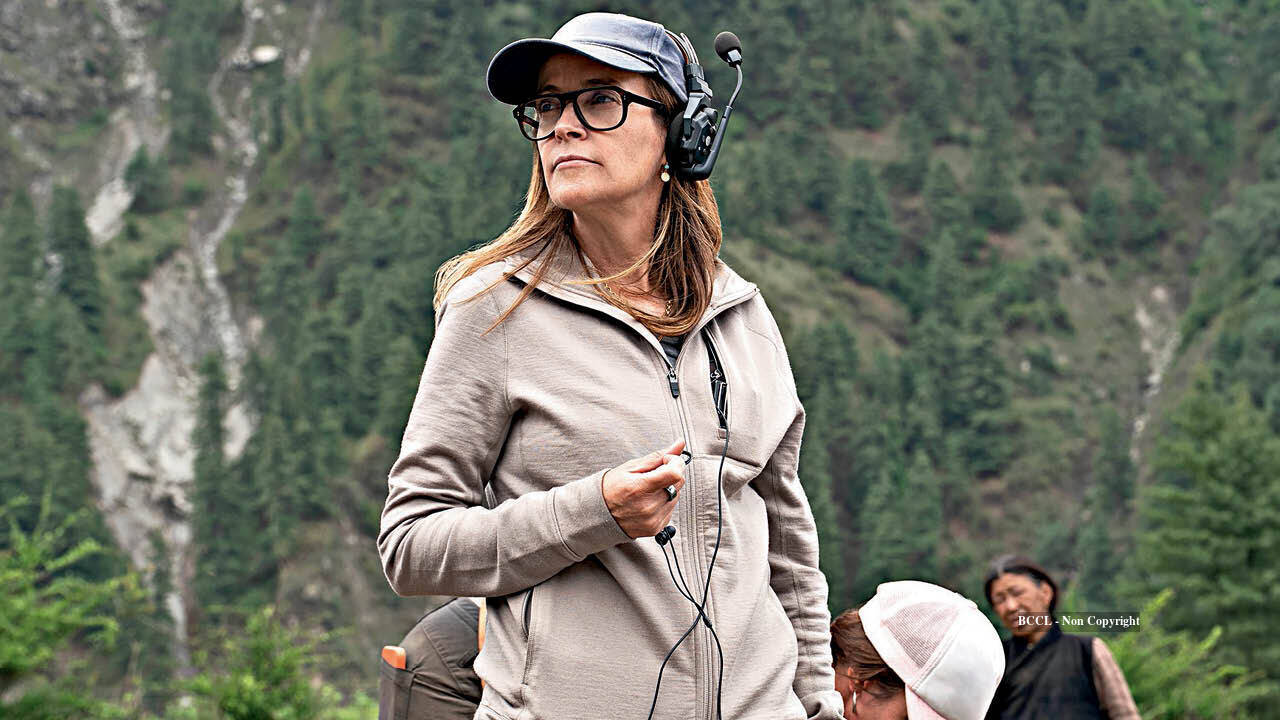
Director Jennifer Peedom
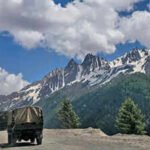
‘I saw how Sherpas often take a disproportionate share of the risks involved in helping foreigners reach the summit’Jennifer Peedom’s route to Tenzing began when she first travelled to Everest more than 20 years ago, drawn by the sheer scale of the mountain. In 2004, she returned to its north side, on the Tibetan Plateau, to find out how Sherpas were faring 50 years after the first ascent. She says that what started as curiosity about a mountain became a long engagement with the people who live around it, and with the tension between their spiritual beliefs and the demands of mountaineering.She kept returning to the same questions in her documentaries Sherpa (which screened at TIFF), Mountain and River: what draws people to extreme places, and what is the cost, physical, spiritual and emotional, of chasing the impossible?Working as a camera operator on other productions, she says that she saw the gap between Western ambition and Sherpa reality up close. “I saw how Sherpas often take a disproportionate share of the risks involved in helping foreigners reach the summit,” she says.Then, in April 2014, while she was filming the lives of Sherpas on Everest, an avalanche in the Khumbu Icefall killed 16 Nepali mountain workers. It became the heart of Sherpa, her acclaimed documentary about that devastating season. The film helped shift attention from the familiar mythology of foreign climbers towards the Sherpas whose labour, skill and risk make Everest expeditions possible.She shares,“I had worked on other documentaries and tried to include the Sherpa narrative, but those stories were often left on the cutting-room floor because I wasn’t in control of the editing. So I decided to make my own film. I went away and worked on different things for many years, but this story kept calling me back.”‘I’m surprised that no one had told this story before’After Sherpa, Jennifer Peedom grew close to Tenzing Norgay’s family, and their trust became the foundation of the project. “I needed their blessing and permission to tell it.I think all those years I had spent in the Himalayas helped them trust that I understood enough about their culture and history to do the story justice.”Jennifer Peedom consulted closely with Sherpa community members and cultural advisers, whose perspectives informed both the screenplay and the way Tenzing is portrayed. The actors talk in Nepali, Sherpa and Tibetan, because a story about identity and belonging, she felt, could only be told truthfully in the languages of Tenzing’s own world. Tibetan-speaking cast members learned the Sherpa dialect for the film.She shares,”I’m surprised that no one had told this story before, but it turned out that I was the person to tell it. I’m particularly happy because the family is pleased with the portrayal, and the response in Nepal, India and the Himalayan community around the world has been very positive. That’s incredibly important to me.”The foundational moments in Tenzing’s life – were non-negotiable aspects that had to be in the filmWhile making the film, one of the harder questions was what to leave out. Jennifer Peedom was adapting a life, and several biographies, into a two-hour film, and the 1953 expedition alone ran for two months.Her method was to identify the foundational moments.She shares,”We had to exclude so much. There’s the backstory, the family story and then the 1953 expedition, which itself lasted two months. There is so much to cover, and adapting a life story and multiple biographies into a two-hour film is a real challenge. I approached it piece by piece and look at the bigger elements. What were the foundational moments in Tenzing’s life? What shaped him as a man? What affected him emotionally? How did those experiences help the audience understand what was driving him up that mountain? For me, those elements included his family, childhood, exile, love story, experience of being a parent and his relationship with Jill Henderson (Honorary Secretary of the Himalayan Club between 1951–1955, and in this role she organised the sherpa teams for several expeditions). Those were non-negotiable aspects that had to be in the film.”She followed the same method for the Everest story.She shares “You can’t tell every single detail or everyone’s story.Our guiding principle was to understand Tenzing’s point of view and identify which aspects of history would help audiences understand what Everest, or Chomolungma, meant to him.”‘Filming Tenzing was much more like being on a real expedition than working on a film set’For a director whose instinct is to go to the places and build the relationships, she says faking it was never an option. Tenzing was shot on location in Nepal and the mountains of New Zealand, for authenticity and for performance: the actors needed to feel the scale, the altitude, the cold and the unpredictability of the terrain, not imagine them.She shares,“The landscape was never just a backdrop, but a living presence in the story.The mountain had to feel beautiful, terrifying and sacred.”Prayer rituals were held on set every day, and the aim, she says, was to do right by the culture and spirit of the story at every stage. It was a demanding drama to shoot.She shares,“We really went into the elements and did things for real. Crews were small. Producers stayed at base camp watching monitors while equipment was helicoptered up to the locations. Many cast and crew had climbed Everest multiple times, including the New Zealand mountain safety team and a Sherpa team of experienced climbers who gave up their season to work on the film. Because they were already seasoned mountaineers, no one-to-one safety minders were needed.“
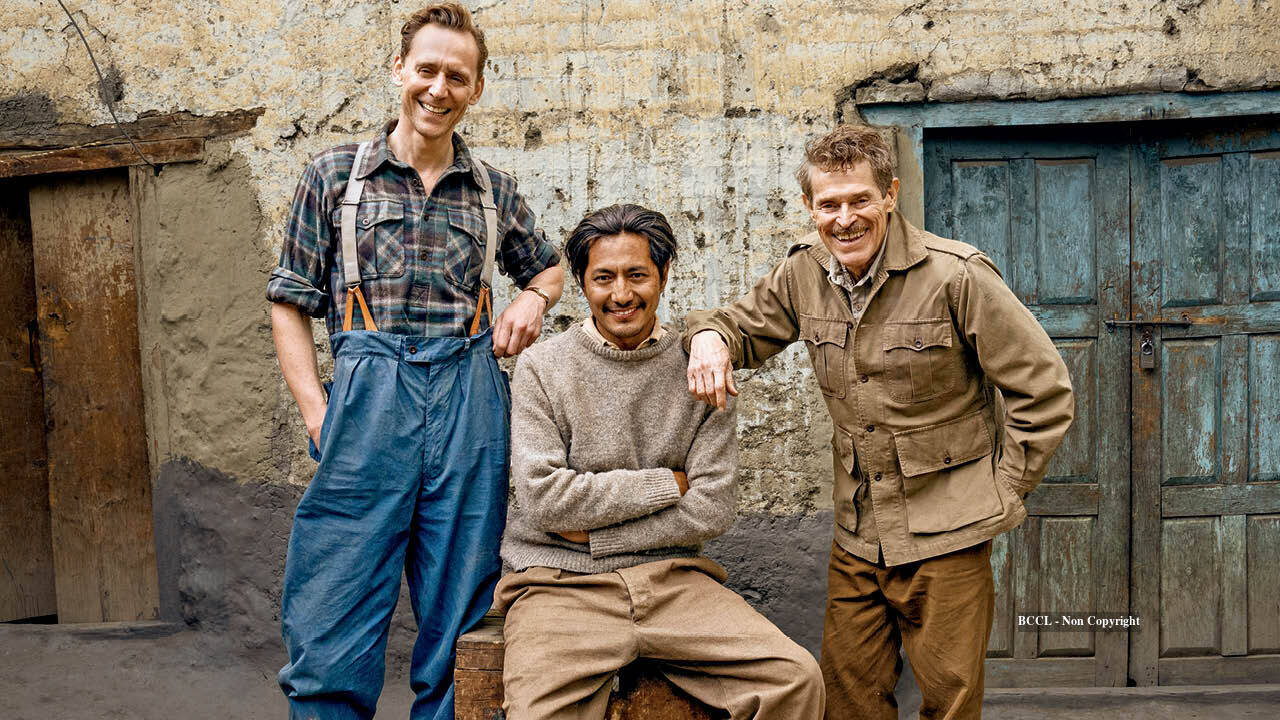
A behind the scene still from Tenzing film set
Comforts were scarce. There were no mealtime tents and no leisurely lunches, and daylight was short. Actors, including Tom Hiddleston, packed their own lunches and managed their own props, with sometimes just one props person and one make-up artist on site. The team shot whenever the weather allowed and scheduled days off for the worst of it.“It was much more like being on a real expedition than working on a conventional film set,” Jennifer Peedom says.Tom Hiddleston felt it too. He said in a statement,“The scale of this adventure is completely unprecedented, unforgettable and unrepeatable. It’s been incredibly inspiring, life-affirming and life-changing, and, like all life-changing experiences, challenging and confronting.”“Without the Sherpas, there is no first ascent. I hope people leave the film knowing that”– Genden Phuntsok who played the role of Tenzing“The script had so much heart and specific insight into the soul of Tenzing, the depth of his devotion and the specificity of his experience in that he was somebody who never felt like he belonged…And so my great honor as an actor was getting to dive into the character — of Ed Hillary — as written in this screenplay, but also the real man.”-Tom Hiddleston who portrayed Edmund Hillary in Tenzing
About The Author