







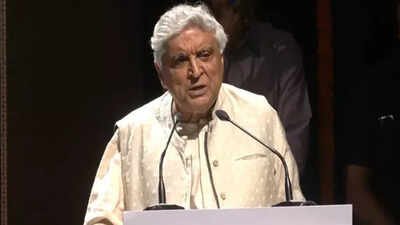
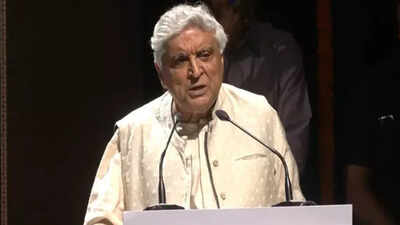
NEW DELHI: Lyricist and former MP, Javed Akhtar, on Saturday questioned the Centre’s proposed delimitation Bill, raising concerns over the allocation of Lok Sabha seats and the potential disadvantage to states that prioritised family planning.Speaking to the media at an event, Akhtar said the final plan was yet to be made public and several aspects of the exercise remained unclear.“First, the final plan has not yet been revealed, how it will be executed, whether new constituencies will be created, what criteria will be considered, and how the country will be divided into various constituencies,” he said, as per ANI.He also questioned the proposed allocation of seats, arguing that states which had not prioritised family planning could benefit at the expense of those that had.“Second, I find it somewhat strange that regions that did not prioritise family planning are being granted more seats, while those that followed family planning are being allocated fewer seats… How does this create any balance? We will examine the details once they are released… We will also observe which members of the opposition, beyond our own government, come forward to endorse or reject this…” he said.The Union Cabinet has cleared three revised draft legislations to facilitate the proposed delimitation exercise and implementation of women’s reservation. These include the Constitution (132nd Amendment) Bill, 2026, the Delimitation (Second) Bill, 2026, and a proposed amendment to laws governing Union Territories. The Bills are scheduled to be taken up during the special session of Parliament beginning November 30.The proposed legislative package provides for a 50% increase in the number of Lok Sabha seats allocated to every state and Union Territory, alongside a corresponding increase in the strength of state legislative assemblies. It proposes raising the maximum strength of the Lok Sabha to 850, with up to 815 members representing states and 35 representing Union Territories.The package also seeks to facilitate the implementation of the Nari Shakti Vandan Adhiniyam, which provides for 33% reservation for women in the Lok Sabha and state legislative assemblies.
Share your thoughts in the comments
Be respectful · TOI community guidelines
While the Opposition has backed women’s reservation, it has objected to linking its implementation with delimitation and demanded that the exercise be based on the latest Census data.The Centre has proposed using the 2011 Census for redrawing constituencies and determining seats reserved for Scheduled Castes and Scheduled Tribes, while retaining the 1971 population basis for state-wise allocation of Lok Sabha seats until 2051.
About The Author