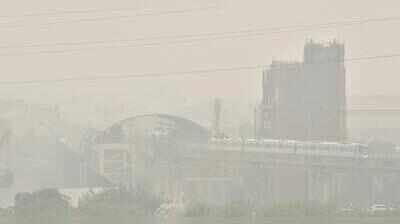










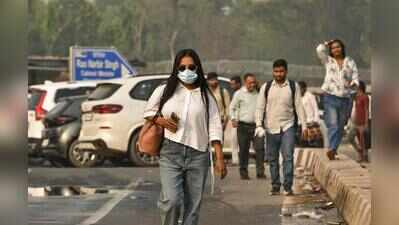
Gurgaon: City’s air quality index (AQI) rose to 322 on Wednesday, in the ‘very poor’ category for the second consecutive day.Manoj Kumar, air analyst at the Centre for Research on Energy and Clean Air (CREA), told TOI, “Air quality likely to deteriorate further next week, with pollution around Diwali and stubble burning adding to the existing load.” He also flagged the El Niño effect and lower surface wind speeds as factors that could limit pollutant dispersion.Of the four monitoring stations in the city, NISE Gwalpahari recorded the highest AQI at 377, followed by TERI Gram at 347 and Sector 51 at 300. All three stations reported very poor air quality. Vikas Sadan recorded an AQI of 264, in the poor category.The PM2.5 level was highest on Wednesday at Gwalpahari (377 µg/m³), followed by TERI Gram (347 µg/m³), Sector 51 (295 µg/m³) and Vikas Sadan (264 µg/m³).The level of PM10 was highest at TERI Gram (338 µg/m³), followed by Sector 51 (300 µg/m³), Gwalpahari (285 µg/m³) and Vikas Sadan (209 µg/m³). According to the CPCB, the annual average permissible limits for PM2.5 and PM10 are 60 µg/m³ and 100 µg/m³, respectively.Meanwhile, HSPCB sealed 10 construction sites in the city after inspections found violations of dust-control norms. “The sites were found without essential pollution-control measures, including anti-smog guns, sprinklers and barricading,” an HSPCB official said.Construction sites are required to take measures to prevent dust from spreading, including covering construction material, regular sprinkling of water, installing anti-smog guns and sprinklers, and barricading sites. Cameras and sensors are also required to monitor construction activity and dust-control measures.The board warned that construction sites found violating the prescribed norms would face strict action, including sealing and penalties.Dr Arunesh Kumar, director and head of pulmonology at Paras Health, Gurgaon, said, “PM10 particles, which include larger dust and debris, irritate the upper airways and can cause prolonged coughing, throat soreness and bronchitis. PM2.5 particles are more dangerous because their smaller size allows them to carry harmful toxins and heavy metals deep into the lungs, damaging sensitive lung tissue. The effects of both types of particles make air pollution particularly harmful for children, senior citizens and people with pre-existing health conditions.”“Cleaning up the construction site dust is not enough; we must aggressively reduce smoke and emissions from vehicles, factories, and burning garbage,” Dr Kumar said.He said reducing air pollution requires addressing both dust and smoke sources, rather than focusing only on construction-related pollution. With stubble burning expected to pick up and festive emissions adding to the mix, authorities have asked civic bodies to intensify mechanical road cleaning, water sprinkling and dust control at construction sites. For now, health experts advise residents, especially children, the elderly and those with respiratory illnesses, to limit outdoor exposure during peak pollution hours.
About The Author