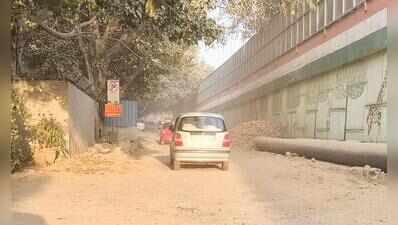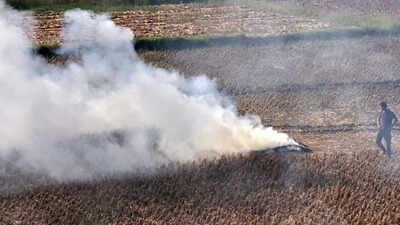










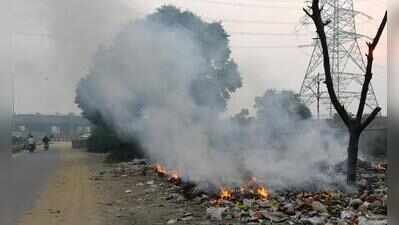
Gurgaon: Drones, low-cost sensors and intensified night patrolling will be used to detect biomass burning in Sohna and Pataudi as Commission for Air Quality Management (CAQM) pushes municipal authorities to strengthen pollution-control measures across six urban local bodies (ULBs) in Gurgaon and Jhajjar districts.At a review meeting chaired by CAQM chairperson Rajesh Verma on Friday, authorities were directed to step up surveillance, field inspections and preventive action against biomass burning, with a particular focus on smaller municipalities. The commission asked local bodies to expedite implementation of their Winter Action Plans and ensure that its pollution-control directions translate into action on the ground.District administrations were also asked to facilitate LPG refills for households covered under Pradhan Mantri Ujjwala Yojana to reduce reliance on biomass for cooking and other domestic needs.Eight pollution hotspots in Jhajjar identifiedCAQM called for targeted interventions at eight pollution hotspots in Jhajjar, including road repairs, traffic signal management, deployment of traffic personnel and dust suppression.Across the six ULBs, authorities were directed to repair potholes, redevelop roads as per the commission’s framework and strengthen dust-control measures through mechanised sweeping, water sprinkling, anti-smog guns, paving, greening and stabilisation of road shoulders.The commission also reviewed dust pollution from construction sites and directed authorities to ensure registration on the dust monitoring portal, strengthen camera-based surveillance and take action against violations at construction and demolition sites and ready-mix concrete plants.Focus on waste processing, legacy dumpsThe commission stressed the need to tackle both accumulated legacy waste and newly generated garbage, while improving the municipal waste collection and processing system.Municipal authorities were asked to ensure 100% door-to-door waste collection, streamline transportation and ensure that collected waste reaches designated processing and disposal facilities, preventing fresh dumping.“Authorities should act on faster remediation of pending legacy waste and stronger arrangements for processing fresh waste,” Verma said.He also sought follow-up on the proposal to set up cluster-based waste processing facilities for Jhajjar and Beri.Night patrols to curb open burningPreventing open burning of waste remained a key focus, with Verma directing authorities to strengthen enforcement of Graded Response Action Plan (GRAP) and conduct coordinated night patrols to check the burning of garbage, plastic, PVC-coated wires, electrical cable scrap and other materials.The drive will involve district administrations, state police, fire services, Haryana State Pollution Control Board (HSPCB) and gram panchayats. Authorities were also asked to act against vehicles operating without valid Pollution Under Control Certificates (PUCC) and those transporting construction and demolition waste without covering it.Reviewing challans issued and FIRs registered for violations, Verma stressed the need to focus on prevention through information, education and public-awareness campaigns, alongside enforcement. Authorities were asked to encourage residents to report violations and participate in pollution-control efforts, while training sanitation workers to improve compliance.CAQM also called for electric heating arrangements at night shelters to prevent people from lighting bonfires to keep warm during winter.
About The Author