







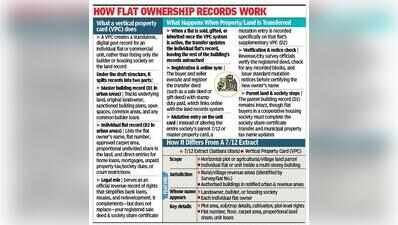
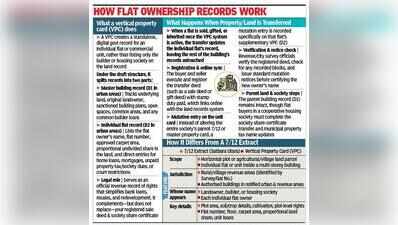
Pune: Flat owners must not be forced into fresh paperwork or extra fees for vertical property cards when the govt already holds their records, consumer representatives have demanded in response to the state’s new draft rules, while the state housing federation has said vertical cards should be made mandatory for all new projects.Released on Nov 26, the draft Maharashtra Land Revenue (Preparation and Maintenance of Record of Rights and Registers of Apartments in Buildings) Rules, 2026, give homebuyers 30 days to file objections and suggestions. The cards will supplement existing land records, including property cards and 7/12 extracts.Vijay Sagar of the Akhil Bharatiya Grahak Panchayat said the govt should collate documents held across departments and issue the cards without another application process. “Consumers are already hassled by multiple applications and registrations for govt services. If the state govt has property records, it should use them to issue cards instead of asking consumers to apply afresh and pay additional fees. Documents may be held by different departments, but that is the govt’s responsibility, not the property owner’s. Asking flat owners to register again, submit documents and pay for another card is unnecessary and amounts to harassment. The govt should collate records internally and issue cards without another cumbersome process,” he said.Advocate Godfrey Pimenta of the Watchdog Foundation said the proposal could improve transparency but needed safeguards. “I welcome individual property cards as they can improve transparency and secure ownership records, especially where developers have failed to execute conveyance. Flat owners should not be denied cards due to developers’ lapses, and their proportionate share in land and common areas must be recorded. Property cards must not replace registered agreements, conveyance or MOFA/RERA protections. Proposed fees will add to the burden, while carpet-area discrepancies, title disputes, mortgages, redevelopment and conflicting govt records could create complications. The system should empower flat owners, not add bureaucracy or harassment,” he said.He added, “The state govt can simply take documents such as society share certificates on record and issue the necessary property cards.”Advocate Shreeprasad Parab of the state housing federation called the proposal progressive and said cards should be mandatory for new projects. He suggested MahaRERA obtain developers’ declarations and undertakings at registration, linking compliance with conveyance obligations under Section 17 of RERA.“The proposed vertical property cards are a progressive reform. Recording individual apartment rights in govt revenue records will improve transparency, protect flat purchasers, facilitate transactions and reduce fraud. Cards should be mandatory for all new projects, with developers submitting a declaration and undertaking to MahaRERA at registration. This should be linked to promoters’ conveyance and title-transfer obligations under Section 17 of RERA, ensuring accountability. The reform must strengthen individual property rights without compromising collective ownership, and create a transparent, secure and legally sustainable housing system,” he said.VK Rao, a committee member of a housing society, hoped the cards would help older buildings going for redevelopment. “We have been hearing of these vertical property cards for a year now. We are hoping that these cards will help old properties going in for redevelopment,” he said.The draft proposes records for buildings, common areas and individual flats. Cards will capture flat details, owner names, area, title basis and proportionate rights in land and common facilities, along with mortgages, court restrictions, property tax arrears, society dues and other encumbrances. It covers authorised buildings with approved plans and registered title or conveyance; unauthorised constructions are excluded. Developers, societies, landowners or individual owners can apply online, and digitally signed cards will follow verification. The facility is voluntary.HOW CITIZENS CAN SUBMIT SUGGESTIONS / OBJECTIONS The draft is available on the Bhumi Abhilekh Maharashtra portal, the revenue department website, and at tehsil, sub-registrar, land records and gram panchayat offices. Citizens and societies can submit objections and suggestions within 30 days of the Nov 26 notification, flagging issues related to fees, eligibility, conveyance, common-area rights, redevelopment, area discrepancies and conflicting govt records.
About The Author