









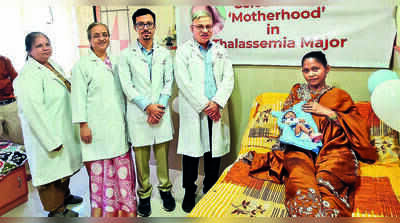
Ahmedabad: Alfina, 25, a resident of Juhapura, holds her eight-day-old child close. After all, it is a delicate feat: Alfina, who has been on blood transfusions since she was two years old, is a Thalassemia Major patient. According to Dr Anil Khatri, her treating doctor, this is only the second successful delivery for a Thalassemia Major mother in Gujarat over the past decade.“I was diagnosed with Thalassemia Major when I was just two years old. My parents would take me to a Red Cross centre for transfusion once a month,” Alfina told TOI. “I was too young to understand, but as I grew up, I realised what the condition entails, and how it will become an issue.”
US Midterm Election Results 2026
She said, “However, I would appreciate my husband who married me despite knowing the possibility that our child could be inheriting the condition.”Dr Khatri, a neonatologist associated for years with Red Cross for the cause of treating thalassemia, said, “Earlier, the lifespan was very limited for Thalassemia Major patients, and marriage was out of the question.”He added, “But today, with proper medication, patients can lead a normal life. Alfina’s case highlights the possibility for hundreds of such women and sends a message to society to embrace such individuals.”The treating team also included Dr Uma Khatri, obstetrician-gynaecologist, and Dr Akshay Khatri, endocrinologist.Dr Khatri said that modern advancements in multi-disciplinary healthcare protocols, aggressive iron-chelation therapy, and strict haematological monitoring have turned what was once considered nearly impossible into a safe and celebratory reality.“Managing a pregnancy complicated by Thalassemia Major requires balancing severe maternal chronic anaemia while avoiding iron overload in vital organs, which can cause significant cardiac and endocrine complications,” Dr Khatri said. “The patient’s vitals were checked every month, and over the past two months, every fortnight. The fetus’ health was also monitored.”
About The Author