







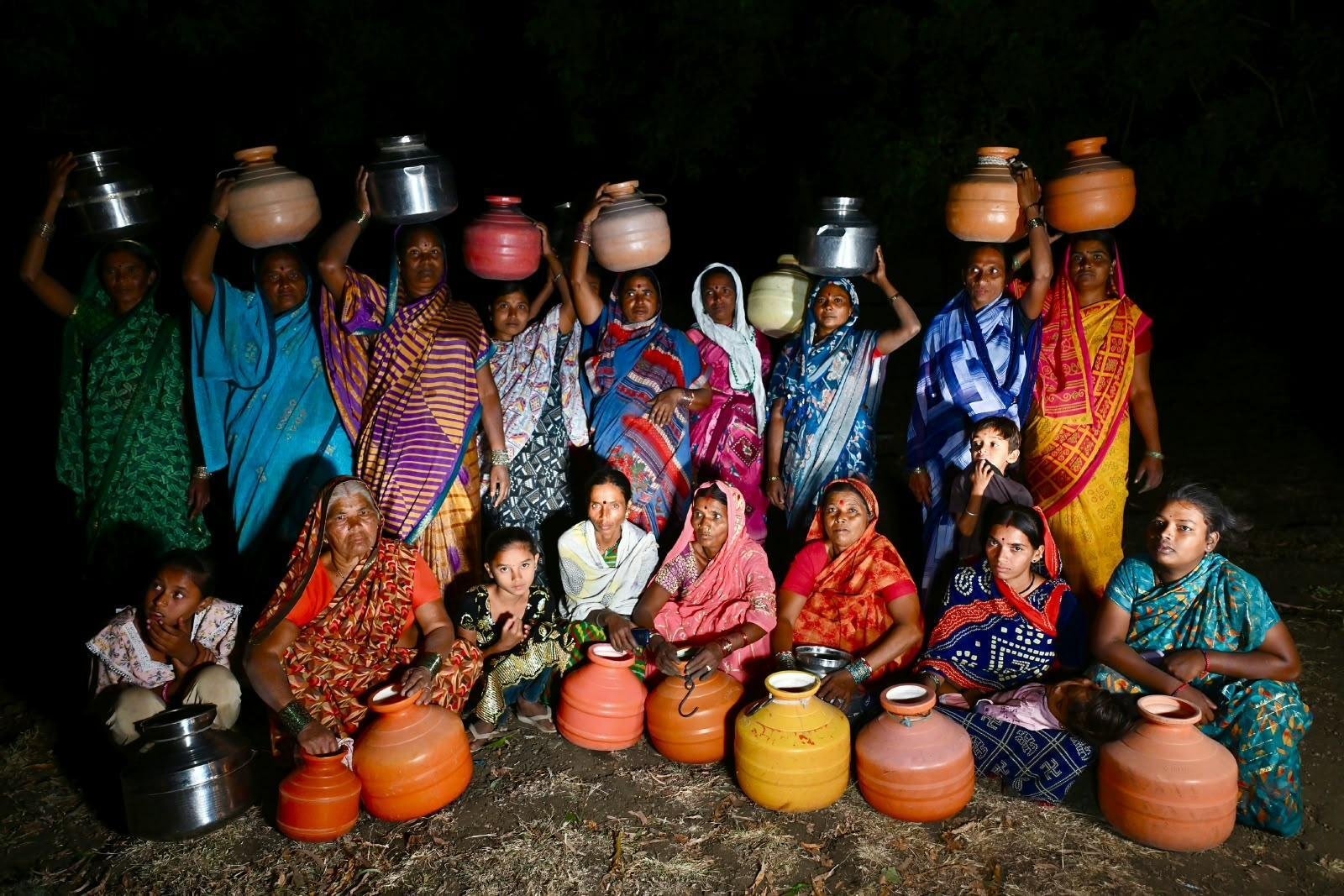
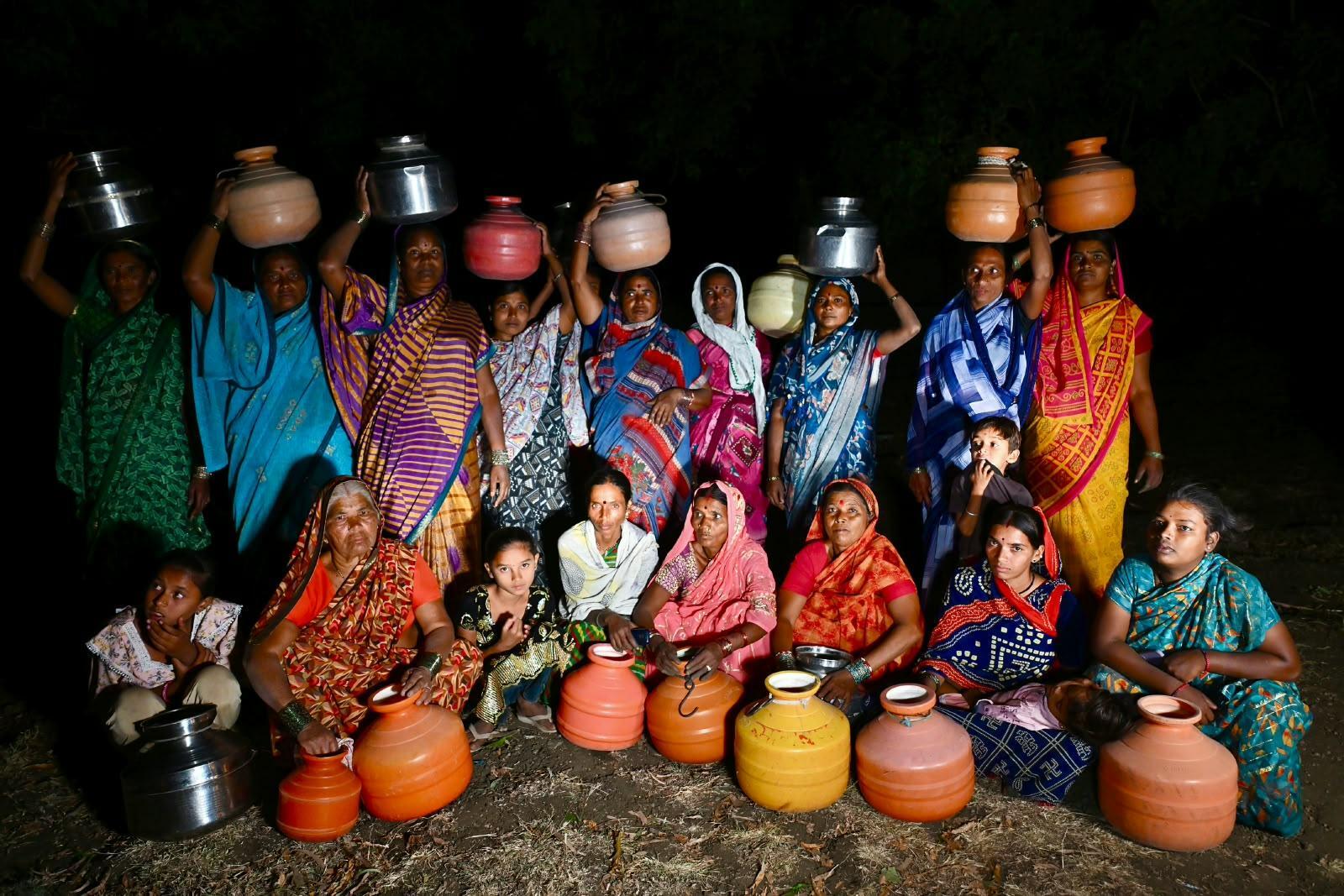
Dharashiv: What does 15-year-old Yash Kakade do after school? He is not rushing between tuition classes or playing cricket and football like many of his counterparts in Mumbai. A resident of Gaur village in drought-struck Marathwada, Yash and his friends spend at least seven hours of their day at a community water tap in the compound of their school, Rajashree Shahu Vidyalaya.He cycles to the school, which is half a kilometre from his village, at 4 am, where he is part of a four-hour vigil for a pot or two of water that he takes home. Then he is back at school for classes which end at 4 pm. Two hours later, he returns to the queue at the water tap and waits there till at least 9 pm.“It’s not too bad, I get to play an hour of cricket between 5 and 6 pm,” he says cheerfully. “And since my classmates are with me at the water tap, we chat with each other to stay awake.” The toilets and taps inside the school are closed because there is no water available.Gaur village is known for its freedom fighters who were part of Marathwada Mukti Sangram, the movement to liberate the region from the rule of the Nizam in Hyderabad and join the independent Indian Union in 1948. At that stage, the Nizam wanted an independent princely state.Marathwada is among the worst-affected regions in the fierce drought which affected 85% of the state’s talukas after the state recorded an 18% rain deficit. All the 76 talukas in Marathwada are drought-hit. The district of Dharashiv, where Gaur is located, has a 41% rain deficit and is already facing a water crisis.The community water tap in Gaur emptied out three weeks ago and no tankers have yet been allocated to the village. However, there is still some water in the well near the school compound. Villagers who do not have private borewells come to the tap here to fill water. Many belong to the Dalit Matang community.Sanjana Kakade comes to the water tap at 3 am with her family including her in-laws, husband and the two children aged four and five.This means the children miss their preschool at the local anganwadi. “I am here till at least 9 am and then I have to go home and cook. The anganwadi is a little far and it becomes difficult to manage this,” she says.Her entire family is pressed into the long wait for water because its aim is to stake a claim to two pots instead of one. “Fights break out at the tap, so it’s best to have more people with you,” she says.Most villagers are daily wagers who work on farms. Their income has plummeted after the soyabean crop which is the mainstay here was wrecked by the drought.Sanjana’s community also raises camels and earns by taking them to different villages to offer rides to children.“I had to buy two additional pots of water costing Rs 60 for the camel. So now I have sent it to Udgir in Latur, which has more water than Dharashiv,” says Deepali Kakade.The state currently has 972 tankers supplying drinking water to villages compared to none at this time last year.Marathwada is being served by 463 tankers but Dharashiv has got only 12 of these. That’s because it depends mainly on private borewells which govt takes over during a water crisis.“Private tankers are fleecing villagers. So they prefer to depend on private borewells which the state takes over during a crisis like this,” says Sanjay Patil Dudhgaonkar from Shetkari Sangharsh Samiti. With little by way of long-term water storage, Dharashiv will face a tough summer.
About The Author