










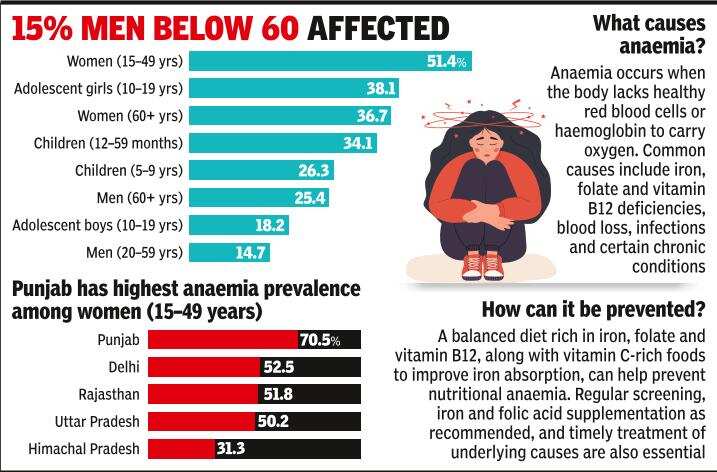
GURGAON: One in two women of reproductive age in Haryana continues to be anaemic, while nearly four in 10 adolescent girls and one in three young children are also affected, according to a new national nutrition survey.
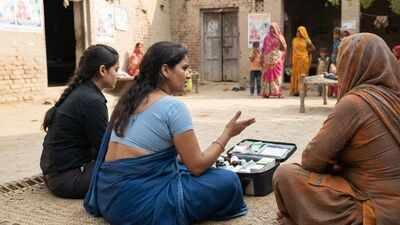
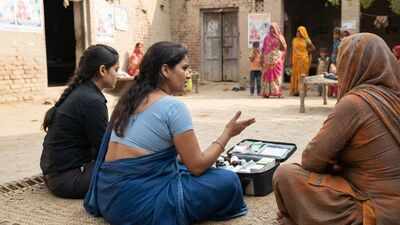
The state has introduced a campaign targeting anaemia prevalence reduction.
The findings point to a persistent public health challenge even as the state govt highlights a substantial improvement in anaemia estimates since the previous National Family Health Survey-5 (NFHS-5).Survey for Assessment of Markers of Population Health, Activity, Diet and Anthropometry (SAMPADA), conducted by the ICMR-National Institute of Nutrition between 2023 and 2025, found that 51.4% of women aged 15-49 years who were neither pregnant nor lactating were anaemic. The prevalence was 38.1% among adolescent girls aged 10-19 years and 34.1% among children aged 12-59 months.The Haryana health department, in a press note issued on Nov 27, described the findings as evidence of substantial improvement since NFHS-5, conducted in 2019-21. It cited a fall in anaemia prevalence among children under five from 70.4% to 34.1%, adolescent girls from 62.3% to 38.1%, adolescent boys from 29.9% to 18.2%, women aged 15-49 years from 60.4% to 51.4%, and men from 19% to 14.7%.“We have intensified efforts under the 100-day Anaemia Prevalence Reduction Campaign as part of Anaemia Mukt Bharat. The campaign focuses on screening, testing, treatment, iron and folic acid supplementation, dietary counselling and inter-departmental coordination,” an official from Haryana health department told TOI.However, these comparisons need to be interpreted with caution because the surveys did not use identical age categories. NFHS-5 covered children aged six-59 months, while SAMPADA covered those aged 12-59 months. For adolescents, NFHS-5 used the 15-19 age group, while SAMPADA covered 10-19 years. The male age categories also differ. The figures therefore show a decline in reported estimates but are not a strictly like-for-like measurement of change in the same population.SAMPADA, which covered more than two lakh individuals across 183 districts in 35 states and Union territories, analysed over 1.7 lakh blood samples. SAMPADA also applied the World Health Organization’s 2024 haemoglobin cut-offs, specific to age, sex and physiological status.Haryana’s estimates were below the national average across all nine age and sex categories reported in the SAMPADA state annexure. Among females aged 15-49 years, the national prevalence was 55.9%, compared with 51.4% in Haryana. Among adolescent girls, it was 46.3% nationally against 38.1% in Haryana.
About The Author