









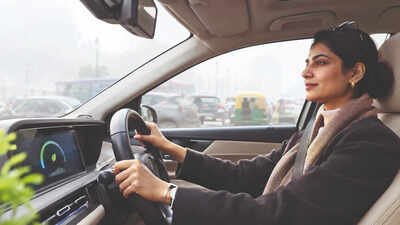

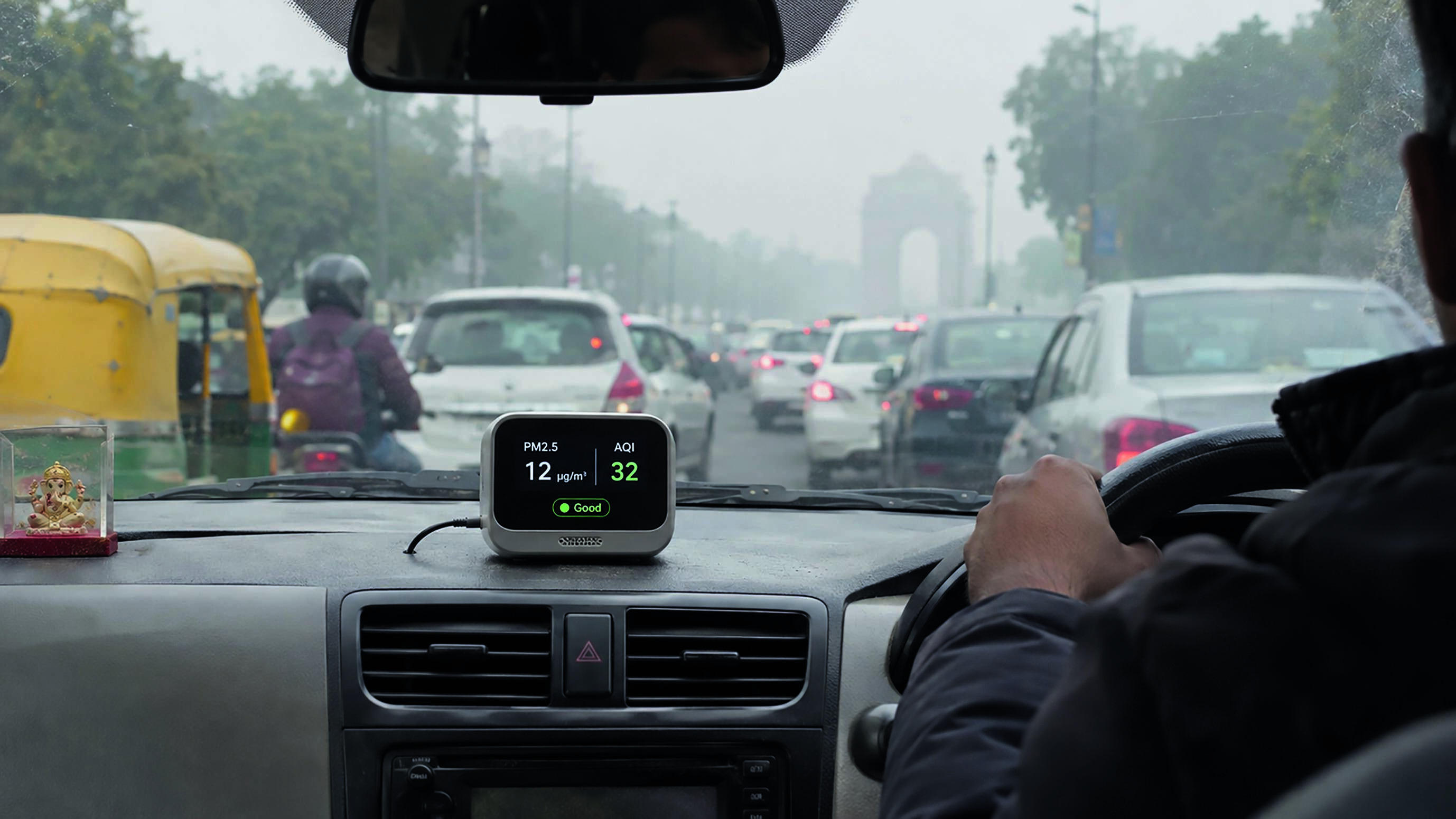
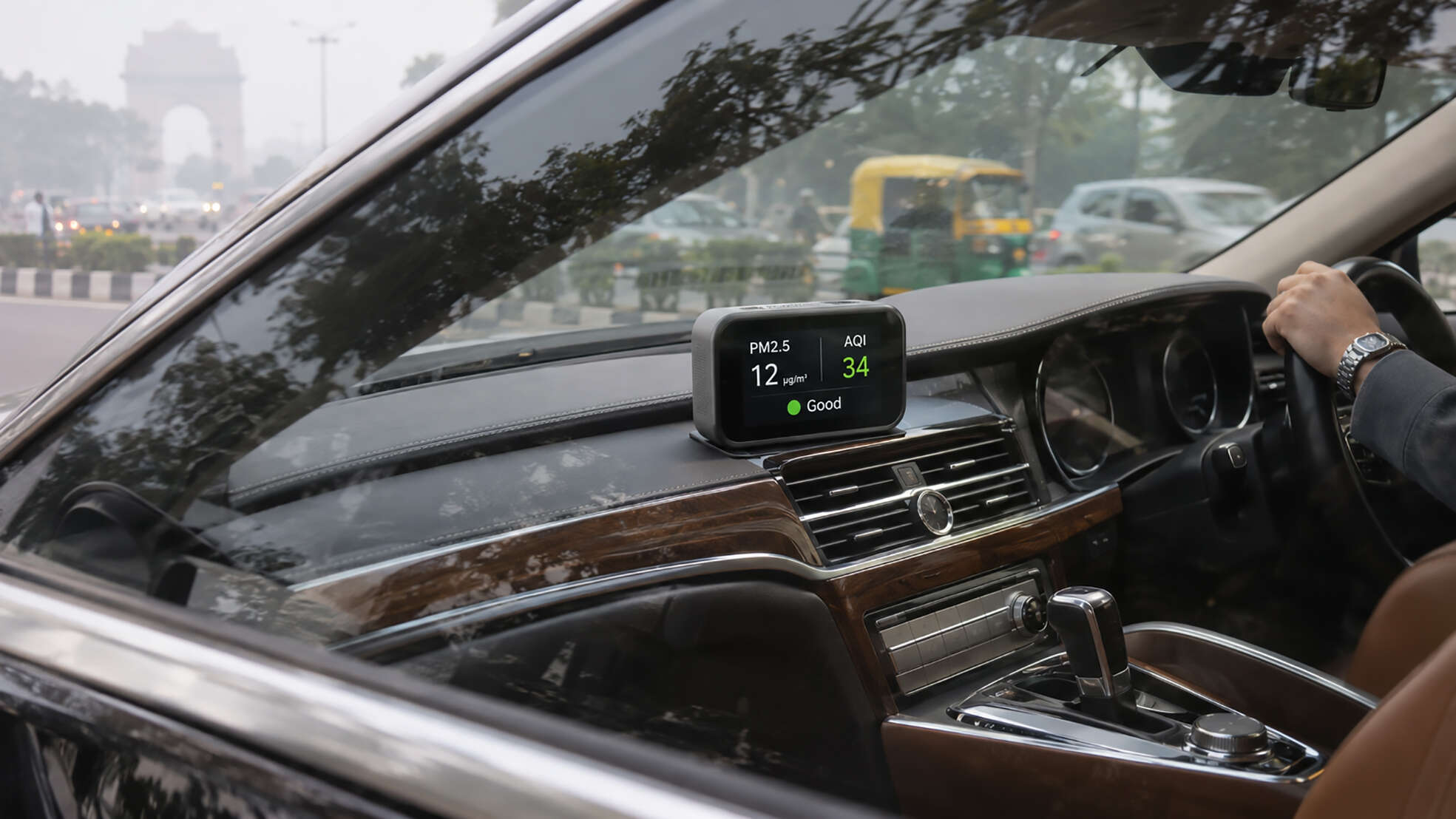
Come winter, and the daily battle with air pollution begins. With this becoming an annual affair in NCR, the focus is shifting to improving the air people breathe inside their homes, cars, and offices. As the Commission for Air Quality Management’s (CAQM) expert committee proposes mandatory in-cabin filtration of PM2.5 and volatile organic compounds (VOCs), we examine what these systems actually do and why clean cabin air could become a key consideration for car buyers.‘A great filter behind a weak fan cleans very little air’A cabin air-purification system is only as effective as the technology behind it. HEPA or high-efficiency filters capture fine particulate matter, including PM2.5, while activated carbon filters adsorb certain gases, and odours. Air-quality displays indicate pollution levels, while recirculation modes help limit the entry of polluted outdoor air.
‘If CAQM wants to tackle vehicular pollution, it must curb pollution at the source’
However, simply having a filter does not guarantee cleaner cabin air. Nikhil Khurana, co-founder of Qubo, a smart living solutions company, says three factors determine how effectively a car can clean its cabin air: the quality of the filtration layers, the fan speed and the use of internal air recirculation. “A filter only cleans the air that passes through it, and the fan decides how much air passes through it every hour, the Clean Air Delivery Rate (CADR). A great filter behind a weak fan, or a purifier left on its lowest setting, cleans very little air. For a typical small car cabin, he suggests a CADR of around 25-30 cubic metres per hour,” he explains. He recommends looking for high-efficiency particle filtration, ideally H13 HEPA and an independently tested CADR.Sachin Panwar, founder of YOGa Clean Air, a clean-air company, emphasises that there is a catch with recirculation. While it limits the entry of polluted outdoor air, prolonged use can cause carbon dioxide to accumulate inside a closed cabin. “In Delhi traffic, your car sits right inside the exhaust of the vehicles around it. Recirculation or purification mode quickly cuts incoming particles, but it traps CO2, which can lead to drowsiness.”‘It’s not only asthma patients who are vulnerable’Dr Neeraj Gupta, clinical director of pulmonology, respiratory critical care, and sleep medicine at Marengo Asia Hospital in Gurgaon, says car air-purification systems can help reduce passengers’ exposure to harmful pollutants. “HEPA filters are designed to capture fine particles, including PM2.5, which can penetrate deep into the lungs and impact respiratory health. Some harmful gases, VOCs, and unpleasant odours are removed by activated carbon filters,” he says. The effectiveness of these systems depends upon the quality of the filter.Dr Abhimanyu Bhatia, intensivist and preventive medicine specialist at at Qris Health, says the health implications of air pollution extend beyond respiratory illnesses. “As doctors, we are concerned about the long-term effects of pollution, not just on the lungs but also on the heart and blood vessels. It is not only asthma or COPD patients who are vulnerable,” he says.
‘Air purifier is no longer just an add-on’
What you can do today
- Before winter, fit a cabin filter rated for PM2.5 with activated carbon, and replace it more often than the manual says
- Use recirculation in heavy traffic and tunnels, then switch back to filtered fresh air on open roads
- Air out a new car before driving: park in the shade and open the doors so the trapped gases can escape
- Skip strong perfumes and air fresheners. They add gases your filter then has to deal with
- Keep the windows rolled up at traffic junctions
– inputs from Sachin Panwar, founder of a clean-air devices manufacturing company
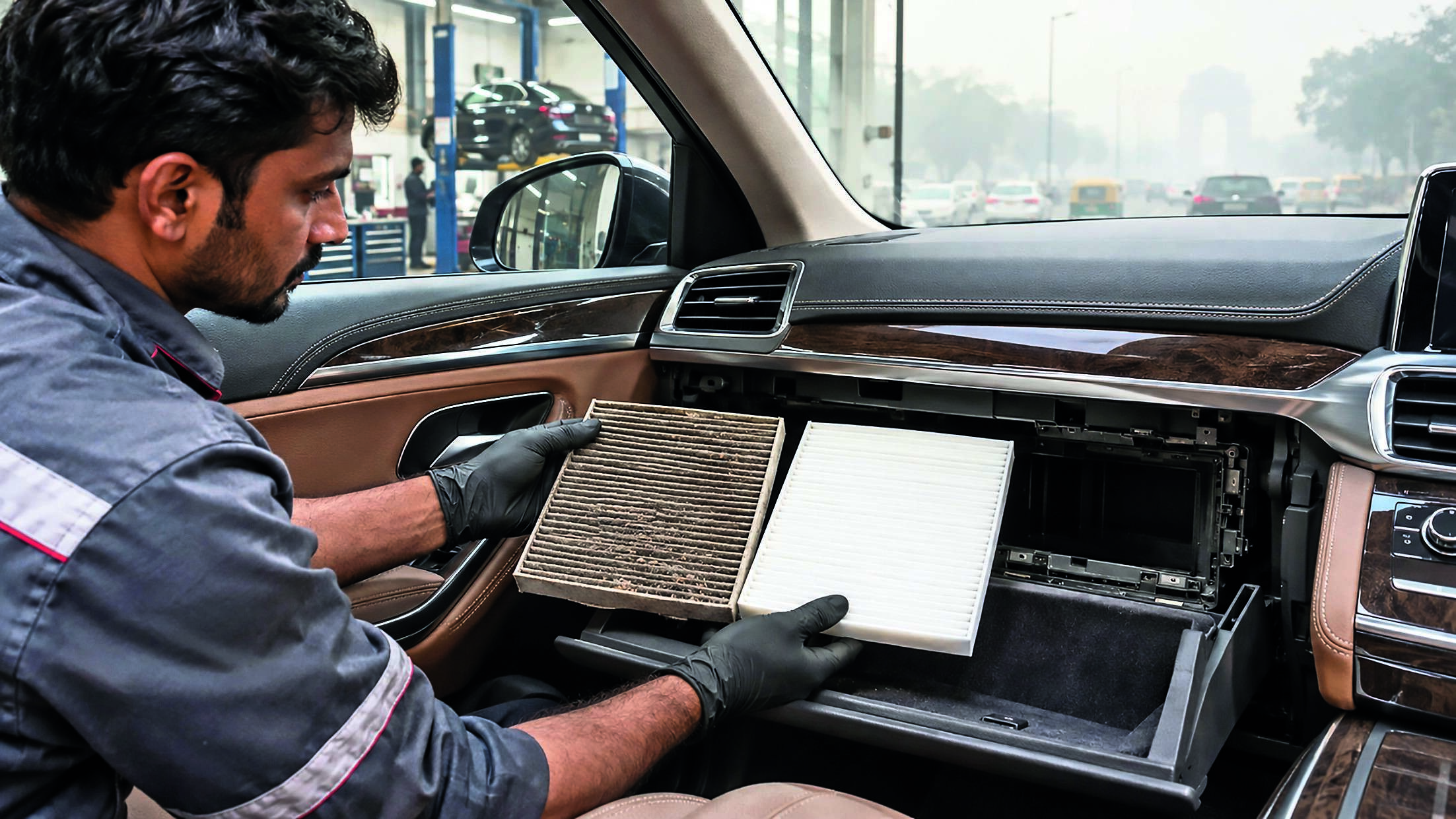
An effective cabin filter is becoming a factor in car buying (Images is for representational purposes only)
An effective cabin filter is becoming a factor in car buyingFor many commuters, the daily drive is also an extended exposure to pollution. Today, cabin air quality already influences how people view their vehicles. Rohan Aggarwal, an NCR-based experience host who owns a 2021 SUV with a built-in air purifier, says he spends around three hours commuting every day and the car’s AQI display usually reads between 30 and 50. “When we bought the car during the pandemic, we weren’t specifically looking for an air purifier. However, looking at the pollution situation today, we realise how important this feature is. It is no longer just an add-on; it is becoming a necessity,” he says.Shamita Chaudhary, an activist and founder of the Malba Project, says, “Having an in-built air purifier offers a sense of reassurance amid worsening pollution.There is a lot of anxiety while stepping out or going anywhere when air pollution is so bad. When I am in my car, at least I feel a little at peace knowing that I am not exposing myself to the general air pollution and the noxious fumes in traffic. It is a huge relief.” For Rohan Kumar, who drives a sedan without an in-built purification system, the issue has become a consideration for his next purchase. “I know that some carmakers offer this feature, and I am now considering it while planning my next car purchase,” he says.
It is essential for car manufacturers to give greater attention to effective cabin air filtration and purification technologies, while also establishing clear standards for the quality of air maintained inside cars
Sudhir Goel, chief strategy officer at Acerpure India
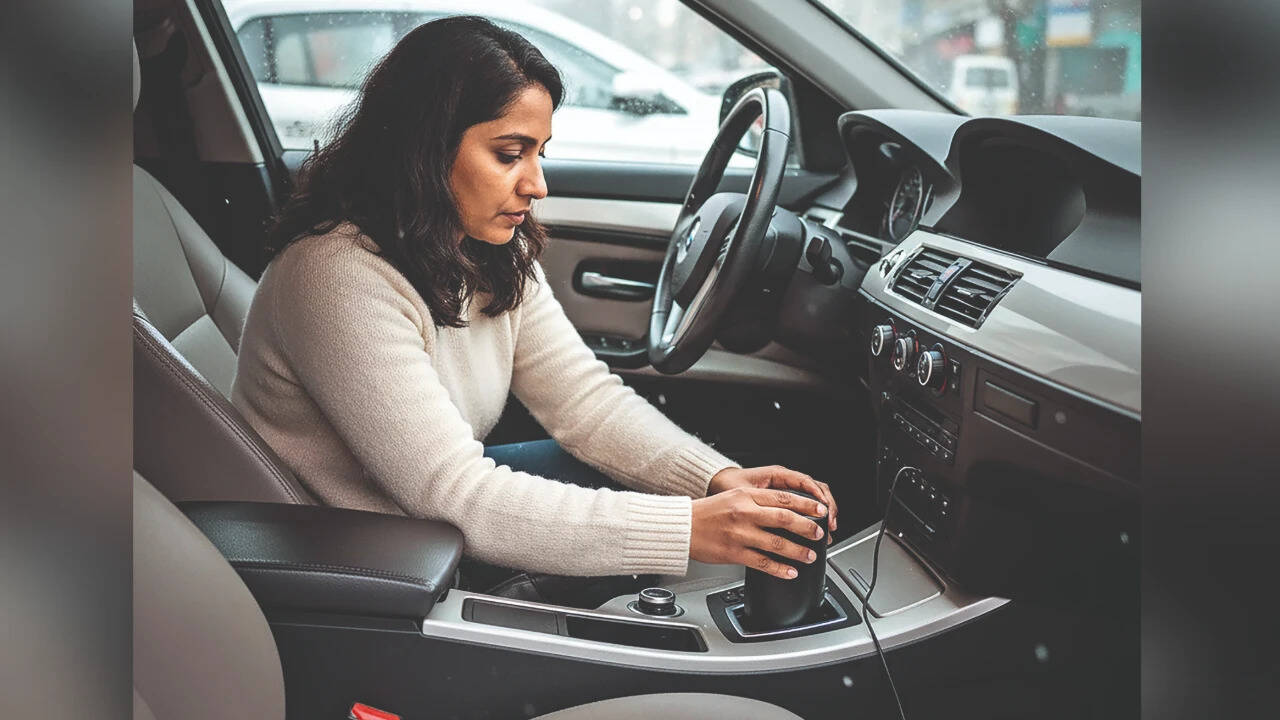
Increasingly, the focus has shifted to in-car protection, getting cabin filters serviced, wearing portable purifiers, or installing air purifiers inside vehicles.
The market also has several aftermarket car air purifiers, but buyers need to assess their actual performance. Sachin cautions that many plug-in devices have small fans and filters that may not move enough air to make a meaningful difference.‘If we can mandate safety features to protect from accidents, why not mandate a basic filtration system?’Drawing a comparison between the CAQM panel’s proposed mandatory air filtration within vehicle cabins and other mandatory vehicle safety features, Dr Abhimanyu believes cabin air filtration deserves similar consideration. “We have made airbags mandatory because they can save lives in the unfortunate event of an accident. But pollution is not an occasional event. It is something we are exposed to every single day. If we can mandate safety features to protect passengers from an accident that may never happen, why can’t we mandate a basic filtration system to reduce something that affects us daily?” he says.‘If CAQM wants to tackle vehicular pollution, it must curb pollution at the source’Varun Singh, founder and managing partner, Foresight Law Offices, says, “The proposal for in-cabin filtration of PM2.5 and VOCs addresses a real public health concern, since people spend a lot of time in traffic in Delhi-NCR. The expert committee’s interim report recommends making it mandatory, but it does not yet specify a deadline or the vehicle categories covered. Those details will decide how workable the measure is, and they are usually settled when the Commission issues a formal direction. Clear standards and replacement norms would therefore help. The proposal also sits alongside roadside emission checks, which target pollution at the source. Taken together, the two approaches can complement each other, provided each is implemented clearly and fairly.”Aakiz Farooq, Senior Climate and Energy campaigner, notes that the in-cabin filtration is a privileged solution to a public problem. “It protects the few who can afford a car with clean air inside, while the vast majority who walk, cycle, ride two-wheelers or take the public keep breathing the same toxic air. Clean air cannot be a feature you pay extra for. If CAQM wants to tackle vehicular pollution, it must curb pollution at the source i.e fewer polluting vehicles, stronger public transport and stricter emission enforcement.”
About The Author