










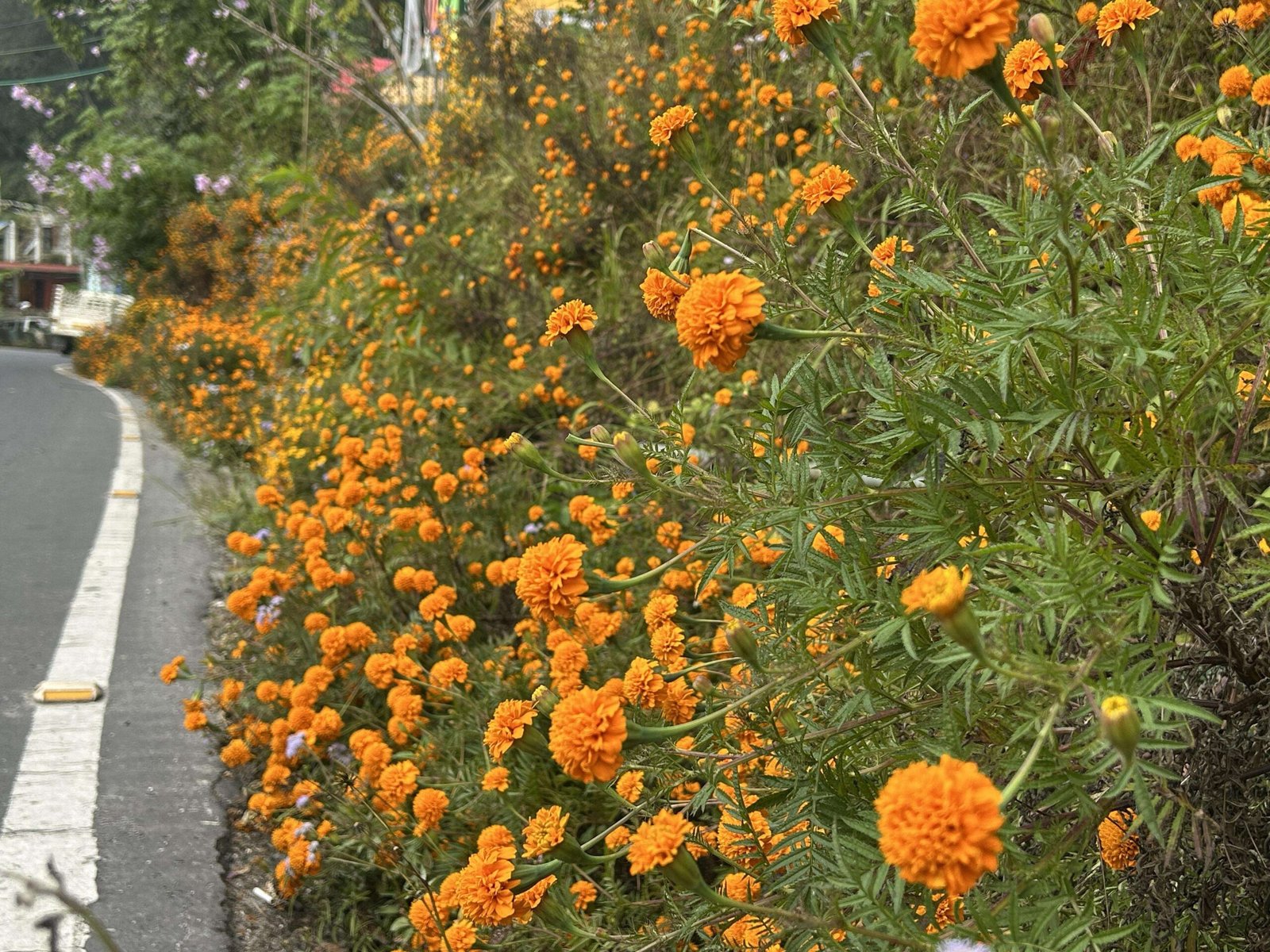
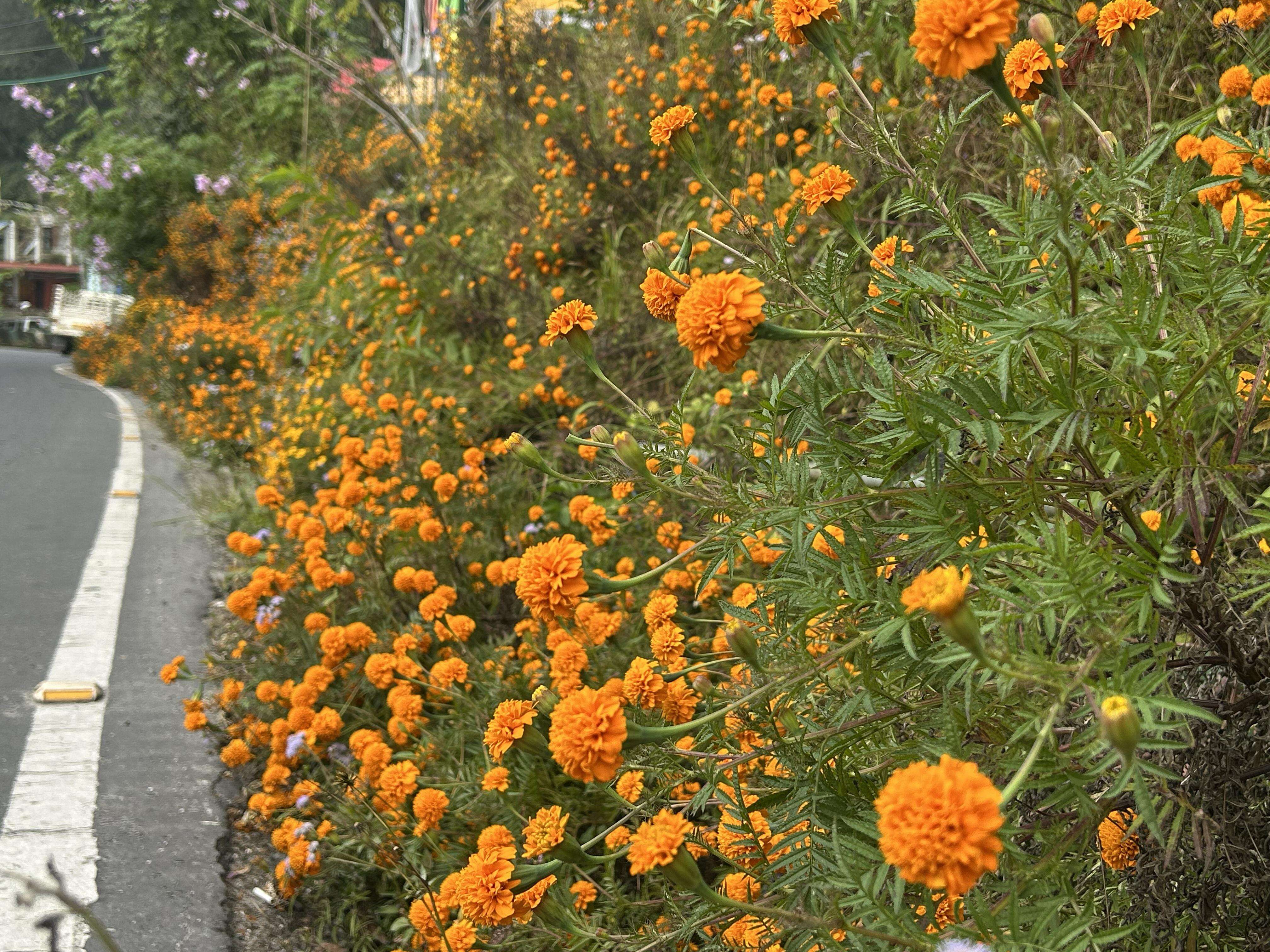
Kalimpong: Marigolds have started making their way into Kalimpong’s markets as households prepare for the five-day Tihar and Diwali. Long garlands hung across windows and doors, and bunches of flowers placed in pots are among familiar sights of Tihar preparations. But much of the marigold sold in the town now comes from Siliguri and parts of the plains while local growers struggle to establish a market for their produce.Traditionally, households in the Hills grew marigold in their courtyards and gardens, weaving the flowers into garlands for the festival. Now, many families have to depend on the market. Devika Sharma of 10th Mile said she does not have enough space to grow marigold at home and has to buy them every festive season. “I have to buy the flowers even if they are expensive,” she said.Local flowers, too, are not always reliable as rainfall and plant diseases often affect production. Flower seller Manoj Rai, who has been in the business for five years, believes this dependence on flowers from outside points to an untapped commercial opportunity. According to his estimates, farmers can earn more than Rs 1 lakh during one festive season. Rai has already received orders for around 500–600 garlands this season, with a one-metre garland fetching up to Rs 70.“People here still grow marigold mainly for their own requirements. They have not started looking at it from a commercial perspective. There is good scope for this business,” he said. However, he added that sudden rainfall and falling temperatures are major challenges for cultivation in the hills.For local growers, however, the difficulty is also about getting a fair price. Cheki Sherpa said flowers brought from Siliguri often sell at lower rates, leaving locally grown produce at a disadvantage. “We put in considerable effort to grow these flowers, using organic manure and looking after the plants ourselves. But when we bring them to the market, we do not receive a fair price. Sometimes, flowers worth Rs 100 are offered only Rs 25 or Rs 50,” she said, adding that some growers had even uprooted their plants after failing to get reasonable returns.Ved Prasad, a floriculturist from Bongbusty, said climatic differences and soil conditions affect flower production. But he also believed that warmer pockets like Bongbusty and Relli have the potential for commercial flower cultivation. He pointed to a growing interest in traditional practices as an opportunity for the local flower economy.“The demand for flowers is increasing, but production remains limited. There is also a growing interest in returning to traditional culture and practices. If we look at flower cultivation from a business perspective, I believe it has a promising future,” said Prasad.Suraj Pradhan, who runs Bagicha, a flower shop in Kalimpong, said the demand for flowers extends beyond Tihar to weddings and other religious occasions. However, access to land, water availability and the patience required for cultivation remained major challenges. “There may be vacant land, but cultivation requires patience. It takes months of care. Other issues include availability of enough water and a rocky soil. However, as long as our festivals, religious traditions and wedding ceremonies continue, there will be a demand for flowers,” he said.
About The Author