








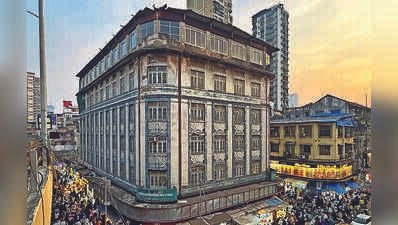
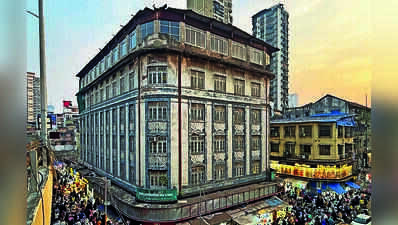
Mumbai: In one of his celebrated ghazals, legendary poet Mirza Ghalib (1797–1869) likens this world to bazeecha-e-atfal or a children’s playground where a tamasha or spectacle is enacted every day.Replace Ghalib with Ismail Beg Muhammad High School at Mohammed Ali Road, and it might, like the poet, strike a note, complaining about the games the world is playing with it. Except that the five-storey school building, amid chaotic traffic and a busy bazaar, stands quiet, and children have not played any pranks or games since 2018 when it shut.Located opposite the iconic Minara Masjid across the road, life goes as usual around the school. Shops selling footwear, perfume, designer hijab and a hakim’s clinic out of the school building’s commercial spaces do brisk business. A notice of a bank that operated from the ground floor until recently informs customers about the new address nearby.The school’s closure, complains local resident Shoaib Khatib in a viral video clip, is a big educational and cultural loss.“Generations of students studied here and many of them are well-placed in India and abroad. The school’s closure symbolises a collective loss to the locals,” says Khatib, an alumnus of the school and ex-trustee of the iconic Juma Masjid of Bombay.Perhaps few know this school, founded in 1936, better than Sohail Lokhandwala, ex-principal (1988-2000). “With over 700 students and 30 staff, this school reverberated with life. It nurtured many first-generation learners. It took under its wings students mostly from underprivileged families or those who wanted quality education in Urdu,” recalls Lokhandwala, also a former MLA. Lokhandwala says the school fell on bad days once the old, committed trustees, including its chairman Salim Ismail Beg Muhammad, died in 2016.Businessman-educationist Nasir Jamal grew up in the area. “I cannot forget the day I took my friend and cousin (maternal uncle’s son) Shahabuddin bhai for admission in fourth or fifth class. Later my siblings too studied here. There was no need to shut the school. They could have switched from Urdu to English medium,” says Jamal.Congress MLA Amin Patel, whose office is a few minutes’ walk from the school, says he has spoken to the trustees and suggested a change in medium from Urdu to English by keeping Urdu as a subject. “This is not the first vernacular school in the city which has faced paucity of pupils. I have spoken to the trustees and told them that they must restart it with a changed medium by keeping Urdu as a subject,” says Patel.We meet Abu Bakar Salim, son of the last chief trustee Salim Ismail Beg Muhammad. He says he has been a trustee since 1988 but did not take much interest in the school affairs till his father was alive.It was Salim’s grandfather Abu Bakar Abdurahman Beg Muhammad, a philanthropist, who built this school, naming it after his uncle Ismail Beg Muhammad despite strong opposition from many conservative Muslims who wanted a mosque here.The founder, says Lokhandwala, was a progressive Muslim who even petitioned Bombay High Court, arguing that the area already had many mosques and a school was needed here. The British judge favoured the school plan.As one leaves looking at the school’s locked gates, the muezzins at Minara, Hamidiya and many other mosques call out azan for the evening prayers. The founder’s original dream stays halted as uncertainty looms over the school’s fate.
About The Author