



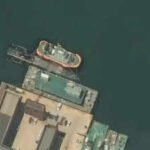






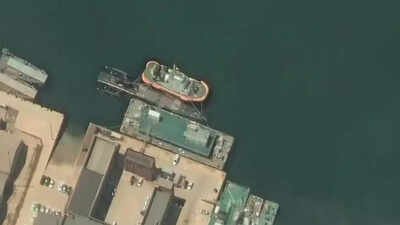
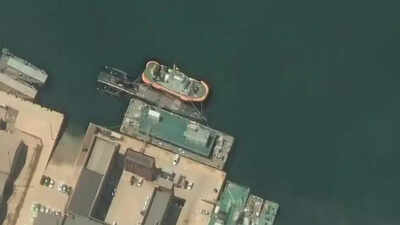
China is developing an unconventional underwater missile platform that could add a new dimension to its military threat against US naval forces. A mysterious uncrewed trimaran submarine, currently undergoing trials, is estimated to carry up to 18 missiles, potentially including the YJ-20 hypersonic anti-ship weapon.Its unusual design combines the ability to travel underwater with the firepower of a missile arsenal ship, raising questions about how Beijing could use such platforms to challenge US aircraft carrier strike groups in the Indo-Pacific.According to Naval News, the vessel was identified through satellite imagery and is believed to be undergoing trials at Huludao in China.The submarine features an unconventional three-hull configuration, comprising a central hull and two smaller outrigger hulls positioned towards the rear. The design appears intended to provide stability when the vessel surfaces, particularly when its heavy missile launch tubes are raised into firing position.Naval News reported that the central hull contains two large weapons compartments, with missile tubes arranged in circular clusters and stored horizontally. The vessel is estimated to have at least eight launch tubes, with the total capacity potentially reaching 16–18 if both compartments have identical configurations.Unlike conventional submarines that can launch missiles while submerged, the Chinese platform would have to surface, open the compartment doors and raise its missile tubes vertically before firing. The additional hulls could help maintain stability during this process.
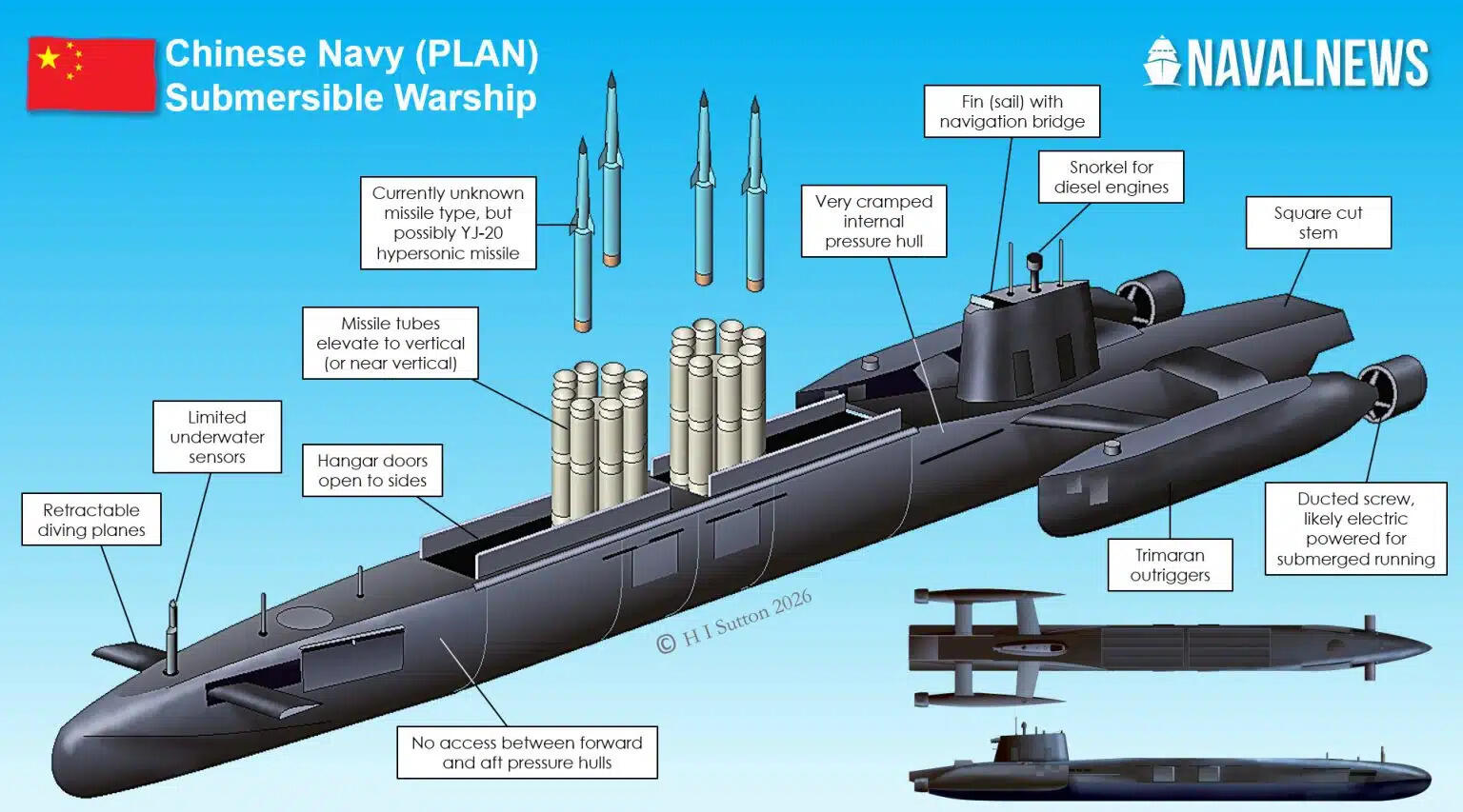
New concept of the Chinese uncrewed arsenal trimaran carrying hypersonic anti-ship missiles (Naval News / H I Sutton)
Naval News, citing ship-design specialist Dr Rachel Pawling of K39 Consulting, estimates the vessel’s submerged displacement at approximately 900 tonnes. Its unusual configuration and limited internal space also suggest that it could be designed to operate without a crew.Naval News identified China’s YJ-20 hypersonic anti-ship missile as a possible candidate for the platform, given its large launch compartments and the missile’s existing integration with Chinese naval vessels.A subsequent report by Defense Express suggested that the submarine could carry between 16 and 18 YJ-20 missiles, with an estimated range of 1,500–2,000 km and terminal speeds approaching Mach 9 (around 11,000 km/h). The missile is designed to target high-value naval assets, including aircraft carriers and other major warships.How could the submarine launch an attack?The vessel could follow an unconventional operating concept, using underwater movement to approach a designated launch area before surfacing to fire its missiles. Unlike conventional submarines equipped with underwater launch systems, the trimaran would need to expose its missile compartments before raising the launch tubes vertically.The vessel could operate by approaching a designated launch area while remaining submerged before surfacing to deploy its missiles.Its operations may depend on targeting inputs from China’s wider military surveillance network, including satellites, reconnaissance aircraft and naval assets, to identify and track moving enemy warships.Once it receives the necessary targeting information, the vessel could surface, raise its missile tubes and launch a coordinated salvo before attempting to submerge and withdraw.Why the development matters for the US NavyThe development could add another layer to China’s anti-access/area-denial (A2/AD) strategy, which seeks to restrict the ability of US aircraft carriers and other major warships to operate close to Chinese territory.A mobile underwater missile platform could complicate US efforts to track Chinese launch systems, particularly if multiple such vessels are deployed across the Indo-Pacific.For the US Navy, the potential combination of underwater mobility and a large missile payload presents a different challenge from conventional surface-based launch systems.A vessel capable of carrying 16–18 long-range missiles could potentially launch a concentrated attack against a naval formation, forcing its escorts to deal with multiple incoming threats simultaneously.
About The Author