








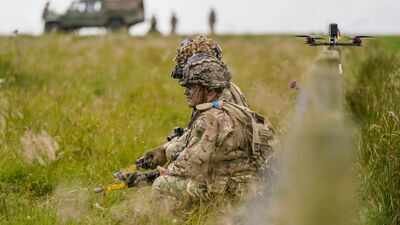
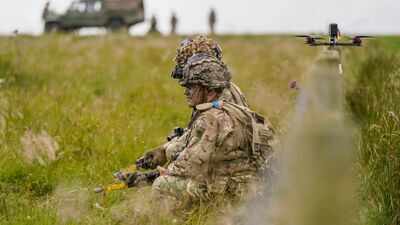
The last time Britain called up its military reservists on a large scale, the Soviet Union still existed and British forces were fighting in the Gulf War.More than three decades later, with Russia’s war in Ukraine reshaping Europe’s security landscape, Britain is once again reaching out to its former military personnel, contacting around 100,000 reservists in a major push to prepare for a potential national emergency.The ministry of defence has begun contacting former military personnel who remain part of Britain’s strategic reserve, UK defence secretary Wes Streeting confirmed, The Independent reported.The letters seek to update their contact details, current employment and civilian skills so that the armed forces can identify and reach them quickly if their services are required during a national emergency.Streeting described the exercise as a “sensible, necessary precaution”, saying the security environment facing Britain and its Nato allies had become increasingly dangerous. He also stressed that the initiative should be seen as reassuring rather than alarming, adding that it did not mean Britain was facing an imminent war.The ministry of defence (MoD) said the exercise is aimed at rebuilding links with the strategic reserve, clarifying former personnel’s recall obligations and assessing the skills they have acquired since leaving military service.The ministry also wants to improve its mobilisation arrangements and offer eligible veterans opportunities to participate in voluntary training and military exercises, according to its guidance published on November 26.As part of the plan, Britain is preparing to invite up to 1,000 Strategic Reservists to participate in Nato’s Exercise Steadfast Defender in spring 2027. The participation will be voluntary and for short durations, Armed Forces Minister Calvin Bailey told Parliament in a written response on October 27.The strategic reserve was last mobilised on a large scale during Operation Granby, Britain’s military contribution to the 1990-91 Gulf War, according to evidence submitted by the ministry of defence to Parliament.During the conflict, around 1,700 reservists were called up, including more than 1,000 soldiers. The authorisation for their deployment was revoked on July 1, 1991, after the situation in Kuwait improved, according to a statement made in the House of Commons.Since then, Britain has not mobilised its strategic reserve on a comparable scale. The MoD said smaller-scale mobilisations have taken place, including the recall of 19 former regular Army personnel to support reserve mobilisation during the Covid-19 pandemic.The move comes against the backdrop of a rapidly deteriorating security environment in Europe, where Russia’s war in Ukraine has revived fears of a wider confrontation between Moscow and Nato.The threat is no longer viewed as limited to conventional warfare on the battlefield, with European governments increasingly concerned about cyberattacks, sabotage, threats to critical infrastructure and the possibility of a prolonged military conflict.For Britain, rebuilding its strategic reserve is part of preparing for a scenario in which a major crisis could demand far more military personnel than its regular armed forces can provide.The threat assessment has also become more serious because of what the UK government describes as Russia’s growing use of hybrid warfare.Britain’s 2025 strategic defence review identified Russia as an “immediate and pressing threat”, warning that Moscow could target the country through cyberattacks, sabotage, information operations and attacks on undersea infrastructure.The UK government’s National Security Strategy 2025 further warned that Britain must prepare for the possibility of its homeland coming under direct threat in a wartime scenario.Against this backdrop, rebuilding the strategic reserve is aimed at ensuring Britain has additional trained manpower available if tensions escalate into a wider conflict involving Nato.
About The Author