










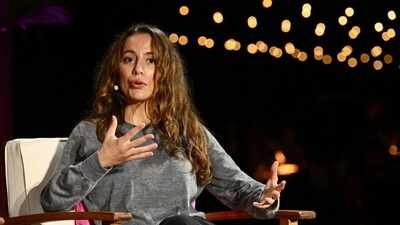
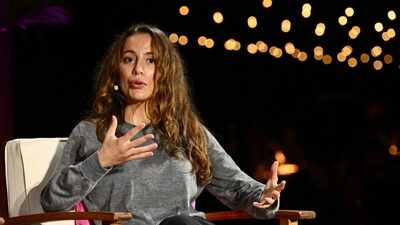
Mira Murati is one of the most intriguing figures in artificial intelligence today, not just because of what she’s done but how she got there. Before she ever touched advanced language models or helped run OpenAI, she was deep in the nuts and bolts of physical engineering. Growing up in post-communist Albania, obsessed with math and science, she eventually moved halfway around the world to chase bigger possibilities. Her journey has zigzagged across continents and disciplines: from a college scholarship student in Canada, to a car designer at Tesla, to the heart of cutting-edge AI, and now, founder of her own AI startup.Murati’s story upends the typical AI origin tale. She didn’t start out as a coder or machine learning whiz. She trained as a mechanical engineer, tinkered with hybrid race cars in college, and spent years in the world of hardware product design before she ever tapped into the exploding world of artificial intelligence. If anything, hers is the path of someone who constantly asks, “How do we take a wild idea and actually make it useful for people in the real world?” That drive to push the boundary between what’s possible and what’s practical has pulled her into some of tech’s most important projects, from launching Tesla’s electric SUV to nurturing the AI models millions of people use every day.
Who is Mira Murati?
As highlighted in Fortune, Mira Murati was born in 1988 in the coastal city of Vlorë, at a time when Albania was struggling to open up after decades of isolation. Early on, she gravitated toward the sheer logic and elegance of numbers, finding comfort and purpose in math and physics. When she got into Pearson College in British Columbia at sixteen, moving continents was less about running away from home and more about chasing big ideas.Next stop: Colby College in Maine for a degree in mathematics, which she finished in 2011. Then she headed to Dartmouth for a master’s in mechanical engineering, where she literally built a hybrid race car for an undergraduate project. That practical, hands-on experience was formative. It’s the sort of work that forces engineers to take risks, adapt fast, and always keep one eye on what people actually need, not just what sounds cool on paper.Her professional life started with a financial twist: a stint at Goldman Sachs in Tokyo. But quickly veered back to engineering at Zodiac Aerospace in France. The real turning point came when she joined Tesla in 2013. Tasked with managing the Model X project from the first design sketches through to production, she got a close-up look at how ambitious technology becomes practical reality. During her years at Tesla, she also saw the early stirrings of AI: the birth of Autopilot and the promise that smart systems could drive, assist, and adapt in ways older machines simply couldn’t. That exposure stayed with her.
From Tesla to Leap Motion: How she found her way into artificial intelligence
By 2016, Murati was ready for something new and more experimental. She joined Leap Motion, working at the intersection of software, hardware, and the human body. The company’s mission: let people interact with computers using just their hands, ditching keyboards and mouses for natural gestures. As head of product and engineering, she was forced to reckon with a simple but big question: How do you make technology feel like an extension of yourself, not just a tool? That hunger to blur the line between human and computer set the stage for her next chapter.
Mira Murati at OpenAI: How she helped build ChatGPT
In 2018, Murati stepped into the world of OpenAI, just as generative models were shifting from academic experiments to something with mainstream promise. At first, she was focused on partnerships and applied AI, but quickly rose in the ranks, taking charge of research, then product, and eventually landing the role of CTO in 2022.Now, if there’s a single moment that marks her transition from behind-the-scenes engineer to visible industry leader, it’s the launch of ChatGPT in late 2022. The chatbot took the world by storm, with 100 million users in just a couple of months, making headlines and forcing everyone to rethink what was possible with conversational AI. While Murati wasn’t the lone creator, she was the architect: coordinating the teams, translating wild research into stable, usable products, and making sure OpenAI’s tech wasn’t just brilliant code, but actually worked for real people.Her influence expanded with the release of DALL-E, Codex, and GPT-4 — all the products that kept stretching the imagination of what AI could do. During this period, she became the public face of OpenAI’s mission and the go-to spokesperson for both the potential and risks of powerful AI tools.
The three-day stint as OpenAI’s interim CEO
Then came the OpenAI boardroom drama of November 2023. In a shock move, Sam Altman was ousted as CEO, and Murati was thrust into the hot seat as interim chief. She helmed OpenAI for a brief, chaotic stretch of just three days, before board reversals and intense lobbying from employees and investors brought Altman back. It was a short tenure, but it left Murati’s name stamped firmly among tech’s top leaders.
Mira Murati after OpenAI: Meet Thinking Machines Lab
By late 2024, after more than six years inside OpenAI, Murati felt the itch for a new challenge. She announced her departure, and by early 2025 had founded Thinking Machines Lab, which is a new AI company built around making machine intelligence more transparent and easier to shape. She was joined by a brain trust of top OpenAI talent, including John Schulman.Her new venture wasn’t about making just another chatbot. At Thinking Machines, Murati aimed higher: she wanted to make AI models that could handle not just back-and-forth Q&A but the messiness of real-life conversation: pauses, interruptions, changing moods, even shifting formats between audio, video, and text. The company’s first offering, Tinker, made it easier for developers to customize, train, and deploy their own models, skipping the technical headaches that usually block small teams from experimenting.
What is Mira Murati’s vision for the future of AI?
As of now, Murati’s vision for AI has crystallized. She’s convinced that the best future for artificial intelligence isn’t one where humans take a backseat to machines or get replaced entirely. She wants to keep people plugged into the decision-making loop for as long as possible. AI, she argues, works best as an amplifier for human ability, not a cold substitute. Amid all the noise in the industry, like concerns about job loss, privacy, bias, and power concentrated in the hands of a few, she stands out as someone who’s relentlessly practical: “Let’s make machines work for people, never the other way around.”Looking back, her career is a string of unconventional leaps: from building cars at Tesla, to engineering gesture-based interfaces, leading the charge on generative AI, and now trying to bridge the gap between humans and machines at the most fundamental level. There’s a restless optimism driving all of it, a conviction that the biggest technologies are only as good as the difference they make in real lives.Mira Murati started out building machines. Now, her mission is to reimagine the partnership between people and those machines, making sure the future stays human, even as the tech gets smarter.
About The Author