








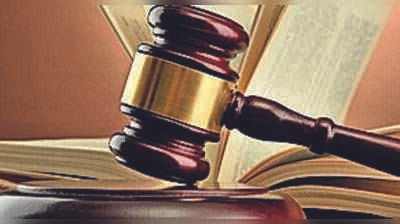

Prayagraj: Allahabad High Court has directed Uttar Pradesh Education Service Selection Commission (UPESSC) to exclude Questions 36 and 37 from the evaluation of Uttar Pradesh Teacher Eligibility Test (UPTET)-2026 after its own final answer key accepted two correct options for each question.Disposing of a writ petition filed by Vijay Sonkar and three other candidates, Justice Vinod Diwakar, in an order dated Oct 28, directed the commission to recompute the petitioners’ scores and issue revised results and scorecards.In the interest of justice, the court extended the relief beyond the petitioners and ordered that the benefit be granted uniformly to all similarly placed candidates.Applying the principle laid down in Smt Shimla Singh vs State of Uttar Pradesh and Another 2019 (3) ADJ 777, a case arising out of UPTET-2018, the court held that the examination should be treated as comprising 148 questions instead of 150. Consequently, the qualifying benchmark is to be recalculated on the basis of 148 questions at the prescribed qualifying percentages.In reaching its decision, the court relied on Supreme Court judgments in Uttar Pradesh Subordinate Services Selection Commission vs Ashok Yadav and Others (2026 SCC OnLine SC 1893), Ran Vijay Singh and Others vs State of Uttar Pradesh and Others (2018) 2 SCC 357, and Rishal and Others vs Rajasthan Public Service Commission and Others (2018) 8 SCC 81.Appearing for the petitioners, counsel Taniya Pandey argued that all four candidates had been declared unsuccessful after securing marks just below the qualifying cutoff of 82. They sought award of marks for Questions 36 and 37 of the Master Set.The court, however, held that the commission’s method of awarding marks only to candidates who selected one of the two accepted answers was unsustainable.“The method rests on the fortuity of a choice made on a question incapable of a single correct answer,” the court observed. It noted that Supreme Court had disapproved of a similar approach in its Aug 5, 2026 order in the Sunil Kumar Singh appeal.According to the court, excluding the defective questions ensures equal treatment for all candidates, as it neither rewards nor penalises anyone for their choice on a question that lacked a single correct answer.
About The Author