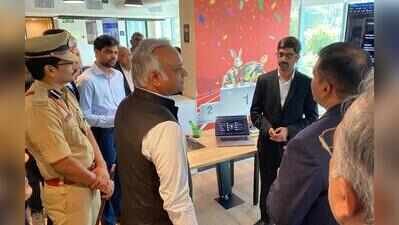










Mangaluru: Author and researcher Indira Hegde said the earliest documented evidence of Kambala was a 1232 AD inscription of Balla Mahadevi of Alupa dynasty, found at Nilavara Bhagavati Temple, now known as Mahishamardini Temple.Hegde traced Kambala’s origins to Tulunadu’s settled agricultural traditions, though its exact beginnings remain unknown. Older paddanas, or oral epics, also provide insights into the tradition’s antiquity, she said.She was speaking on ‘The Traditional Kambala of Tulunadu’ at Kodialguthu Centre for Art and Culture in Mangaluru on Tuesday. Intach’s Mangaluru Chapter and Art Kanara Trust organised the talk as part of World Heritage Week celebrations.Highlighting Kambala’s links with Bhutakola and Tulunadu’s land and communities, Hegde described it as one of the region’s most inclusive traditions.“Kambala transcended barriers of caste and religion. Communities across religious groups maintained Kambala buffaloes, and Christian and Beary Muslim communities also conducted Kambalas. Even today, Dalit communities possess a deep knowledge of its rituals. It is one of the most inclusive traditions of Tulunadu,” she said.However, women were traditionally barred even from watching Kambala, let alone participating, she said.Hegde distinguished between Kambala conducted as a sampradayika, or traditional practice, and as a kreeda, or sport. She also discussed regional variations in customs and rituals and their cultural significance.The audience discussed Kambala’s commercialisation, community history, gender restrictions and future. Jyothi Chelairu, Prof P Krishnamoorthy, Nemiraj Shetty, Shrisha and Benet G Ammanna participated. Hegde was felicitated.
About The Author