









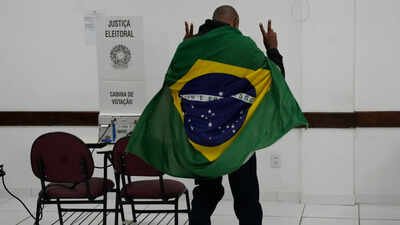
Brazilian voters are heading to the ballot box for a closely contested presidential runoff between incumbent Luiz Inácio Lula da Silva and right-wing Senator Flavio Bolsonaro, the eldest son of former president Jair Bolsonaro. With polls indicating a neck-and-neck race, the outcome will shape the direction of Latin America’s largest economy and its relations with the United States.The election pits Lula, a veteran left-wing leader seeking another term, against Bolsonaro, who has courted US President Donald Trump and promised a shift in Brazil’s economic and foreign policies. Flavio Bolsonaro secured more than 2.2 million votes more than Lula in the first round earlier this month, although turnout and support from voters who backed other candidates could prove decisive.The campaign has centred on rising living costs, crime, corruption and mounting pressure on public finances. Foreign policy has also emerged as a significant issue following Washington’s tariffs on Brazilian goods in 2025.Cost of living, crime and corruption take centre stageEconomic pressures have emerged as a key challenge for Lula, with inflation remaining above the central bank’s 3% target. More than two-thirds of respondents in an August Quaest poll said their purchasing power had declined compared with the previous year. Lula has promised to control inflation and gradually reduce borrowing costs, while Bolsonaro has proposed stabilising public debt to bring interest rates down.Public finances are another major concern. Brazil’s public debt rose to 82.9% of gross domestic product during Lula’s current term, while high interest rates have added to the financial strain on households and businesses. Bolsonaro has pledged to improve the primary fiscal balance by 1.5% of GDP within 18 months. Lula, meanwhile, has targeted an effective primary surplus of around 1.3% of GDP by 2030.Crime and corruption have also featured prominently. Bolsonaro has promised maximum-security prisons and chemical castration for serious sexual offences. Lula has proposed expanding federal prison capacity to hold gang leaders while investing in poorer communities to limit organised crime.Both candidates face scrutiny over corruption allegations involving their circles. Bolsonaro is under investigation over alleged corruption, money laundering and tax evasion linked to money received from disgraced former banker Daniel Vorcaro to produce a film about his father. He denies wrongdoing. Lula’s son is also being investigated in cases involving alleged influence-peddling, corruption and fraud, and has denied the allegations.Trump ties and Brazil’s global directionForeign policy has emerged as a major dividing line. Bolsonaro wants to strengthen relations with the US, Argentina and Israel, arguing that ties with these countries have deteriorated. He has also highlighted opportunities for closer economic cooperation with Washington, including in rare earth minerals, an area where Brazil holds substantial reserves.Lula, by contrast, has advocated multilateralism and stronger ties with the Mercosur bloc and BRICS nations. He has criticised Trump’s trade measures and raised concerns about US intervention in Brazil’s affairs.The result could mark a significant ideological shift for Brazil. While Bolsonaro has promised an amnesty for his father, who is under house arrest over his conviction for attempting a coup, Lula has portrayed his rival’s political camp as a threat to democratic institutions.
About The Author