











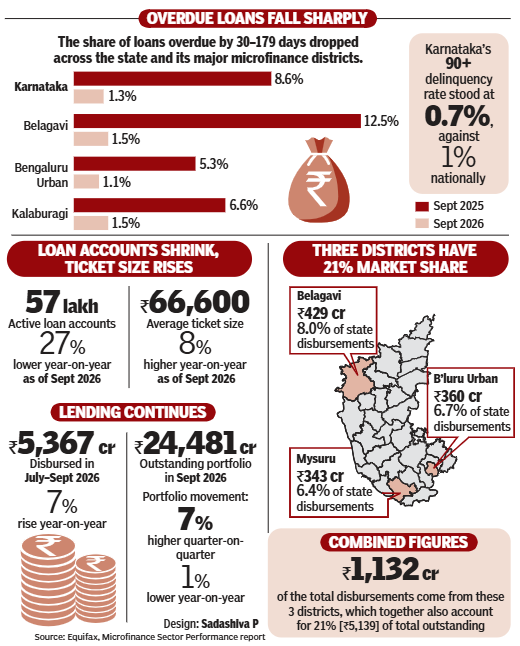
Karnataka is one of India’s largest microfinance markets, accounting for 9% of the country’s microfinance portfolio. After a period of repayment stress, the sector is showing signs of recovery, although active loan accounts have declined by 27%, compared with a 23% fall nationally, according to data from the Association of Karnataka Microfinance Institutions (AKMI).However, changing lending patterns raise a larger question: Is the industry moving towards more sustainable credit, and what does this mean for the households it serves?For many women, a loan is more than just financial assistance to meet immediate needs. It can help them purchase equipment, establish small businesses and build independent sources of income.An example is Anasuya Hakkeri from Belagavi. According to AKMI, she began her borrowing journey with a loan of ₹6,000 in 2013. She is now in her sixth loan cycle, employs three women and earns more from her enterprise than she did when she started.
Success stories like Anasuya Hakkeri highlight the potential of microfinance for women’s empowerment.
However, such success stories depend on more than the availability of credit. The microfinance industry continues to face concerns over alleged coercive recovery practices, middleman fraud, loan-waiver rumours and drought-related financial stress among borrowers, particularly in northern Karnataka.The challenge is to ensure that lending is accompanied by support that enables borrowers to make their enterprises financially viable. Training in bookkeeping, access to government schemes, financial literacy and social security coverage must become integral to lending relationships.As Karnataka’s microfinance sector enters its next phase, its success will depend not merely on loan repayment rates but also on whether credit helps borrowers build sustainable livelihoods without exposing them to new financial vulnerabilities.
About The Author