









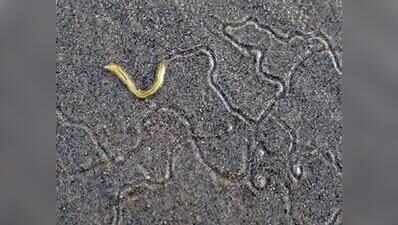
Kolkata: Scientists have discovered a new species of marine bristle worm along the northern Bay of Bengal coast, marking the first addition to the genus Hypereteone from Indian waters in nearly a century.Named Hypereteone indica, the species was found in the intertidal zones of Udaipur beach in Odisha and Hijli beach in Bengal. The discovery takes the number of recognised species in the genus worldwide to 10.The study, published in the journal Marine Biology Research, was led by Dr S Balakrishnan of the Zoological Survey of India’s Marine Aquarium and Regional Centre in Digha. Research scholars S Krishnaraj and Chaiti Manna and Brazilian researcher Veronica Maria de Oliveira collaborated on it.Researchers collected 12 specimens — six from each beach — during low tides in Aug, Sept and Dec 2025. The worms were spotted in the early morning but could not be found after sunrise despite repeated attempts, suggesting possible sensitivity to light or a distinct daily activity pattern.The team distinguished the species from its relatives by several physical features, including a prominent terminal ring on its proboscidial papillae, ventral cirri as long as the neuropodia, and bristles with a long, curved tooth accompanied by smaller accessory teeth.The worm has an elongated, flattened body. The holotype — the specimen used to formally describe the species — measures about 43 mm. Pale yellowish when alive, it turns opaque brown after preservation.The last species of the genus reported from India was Hypereteone barantollae, described by French zoologist Pierre Fauvel in 1932.The discovery highlights the underexplored marine biodiversity of the northern Bay of Bengal. Limited taxonomic research may have left several species along the Indian coastline undocumented, the researchers said.The study was supported by the Union ministry of earth sciences under its Deep Ocean Mission.
About The Author