







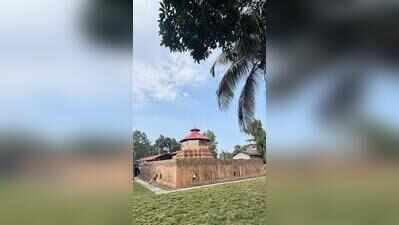
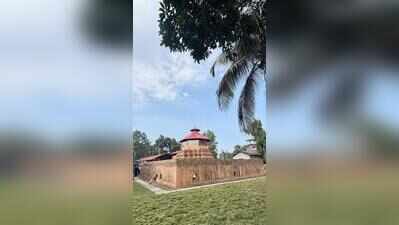
Guwahati: After surviving two major earthquakes and years of structural damage, North Guwahati’s Rudreswar Devalaya has reopened following scientific restoration.The 18th-century temple, on the northern bank of Brahmaputra, is known for its blend of Ahom and Mughal architectural styles. Built by Ahom king Pramatta Singha in memory of his father, Rudra Singha, it remains both an archaeological site and a place of worship.The restoration cost Rs 2.33 crore. It focused on repairing the structure while retaining its original character and religious traditions. Communities continued worship at the temple despite the damage, even building a temporary wooden-and-tin manikut.“We have endeavoured to conserve Rudreswar Devalaya while preserving its original architectural character and living religious traditions. Its restoration reflects our commitment to scientific conservation and the protection of Assam’s rich archaeological heritage,” Nabajit Deori, director, Directorate of Archaeology, Assam, told TOI.The temple stands on a raised square platform and includes a mandapa, an inner pradakshinapatha and an upper-storey shrine surrounded by an open circumambulatory passage.“Particular emphasis was placed on the scientific documentation and restoration of the inner pradakshinapatha, following the method of anastylosis, wherein original bricks were individually numbered, measured and digitally documented before being reinstated in their respective positions,” an official said.The reopening coincided with World Heritage Week 2026. The programme was organised by the department of indigenous and tribal faith and culture, Assam, with the Kamrup district administration and North Guwahati College.Kamalpur MLA Diganta Kalita inaugurated the event. Hajo-Sualkuchi MLA Prakash Chandra Das and Kamrup district commissioner Deba Kumar Mishra also attended.Kalita said preserving Assam’s historical monuments was a collective responsibility. Mishra stressed the need to encourage greater public interest in Kamrup’s history.
About The Author