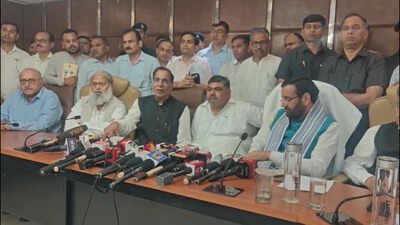











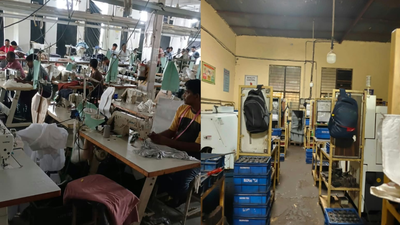
GURGAON: The three-day strike by Haryana’s electricity employees has brought manufacturing activity across several industrial sectors in Gurgaon to a standstill, with industry leaders estimating production losses of more than Rs 20,000 crore in the district alone.Textile manufacturers, export houses, automobile-component makers, food-related businesses and other industrial units have stopped production since Wednesday because of the disruption in electricity supply, while several establishments have asked employees to stay away from work until power is restored.The shutdown has disrupted production schedules and supply commitments, raised concerns over delayed customer orders and threatened to affect workers’ earnings, as the strike against the parallel electricity distribution licences continues to hit industrial areas.Industry representatives said the scale of the disruption was particularly worrying for a manufacturing and export hub dependent on reliable electricity to meet production targets and delivery deadlines.Two prominent industry bodies, the Gurgaon Chamber of Commerce & Industry (GCCI) and the Progressive Federation of Trade & Industry (PFTI), have written to Haryana chief minister Nayab Singh Saini seeking urgent intervention to restore normal power supply and prevent further losses.In a letter dated October 23, GCCI president Vikas Jain said power outages, which began on the night of October 21, had severely disrupted industrial and commercial activity across several parts of Gurgaon.He pointed out that manufacturing units were facing production stoppages, interruptions to scheduled operations, delays in fulfilling customer orders and substantial financial losses.The chamber also warned that prolonged outages could expose industrial machinery, production processes and raw materials to damage, while jeopardising contractual commitments and delivery schedules.For businesses operating to fixed production cycles and dispatch deadlines, even a temporary interruption can have consequences beyond the immediate loss of output.Some establishments have turned to diesel generator (DG) sets to keep operations running, but GCCI said this was neither economically sustainable nor operationally feasible over an extended period.Higher diesel expenditure and the cost of captive power generation were adding to the financial burden on businesses, while capacity and technical limitations prevented many units from running their entire electrical load on generators continuously.The chamber urged the state government and electricity authorities to prioritise the restoration of supply to essential industrial feeders, manufacturing clusters and critical commercial areas.It also sought adequate contingency arrangements, better coordination among officials and timely updates on restoration timelines so that businesses could plan their operations.The disruption has also raised concerns about workers’ livelihoods.PFTI, in its October 22 letter to the chief minister, said the strike had left industrial operations at a standstill and workers idle in several industrial areas.It warned that the shutdown had come during the peak festive season, when industries and workers depend on increased production and business activity to earn incomes, incentives and bonuses.PFTI chairman Deepak Maini said continued closure could affect the livelihoods of thousands of workers and create avoidable industrial unrest and law-and-order concerns.The federation called for urgent restoration of electricity, deployment of alternative technical personnel and emergency response teams, and a dedicated control room empowered to coordinate restoration work and communicate with industry associations and consumers.Both associations expressed concern over the absence of effective arrangements to maintain electricity supply during the strike.PFTI said that despite assurances about preparedness, adequate alternative arrangements did not appear to have been made.It also flagged inadequate communication, saying consumers who approached complaint centres and officials were being told that power restoration was not possible because Dakshin Haryana Bijli Vitran Nigam (DHBVN) employees were on strike.GCCI similarly sought emergency coordination and a reliable mechanism to ensure uninterrupted supply until normal operations resumed.“The industries with sensitive manufacturing processes, critical data transmission and communication networks could suffer even from brief interruptions,” said GCCI.PFTI said it was neither supporting nor opposing privatisation as a matter of principle, but maintained that any new distribution model must have a clear policy framework, technical preparedness, accountability mechanisms and adequate safeguards for industrial and domestic consumers.It cautioned against implementing a major change without addressing concerns over the existing distribution network.The industry bodies asked the government to consider an appropriate mechanism to assess losses suffered by affected industrial units and provide relief wherever permissible under applicable policies and law.It warned that a prolonged crisis could damage industrial productivity, employment, business confidence and Haryana’s reputation as an investment destination.
About The Author