









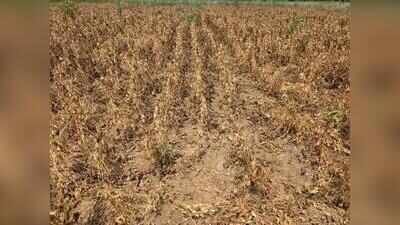
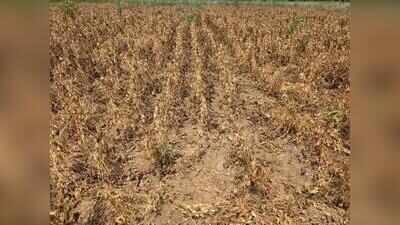
Pune: The state agriculture department has directed seed firms to compensate soybean farmers whose losses were confirmed by valid panchanamas in view of drought-related crop loss and widespread complaints of poor seed germination, warning of legal action if they did not comply within 15 days.The directive issued on Oct 16 followed multiple rounds of hearings conducted by the directorate of quality and inputs after more than 22,000 farmers, largely from Vidarbha and Marathwada, complained of poor germination of soybean seeds supplied by private firms and state-run Mahabeej. Around 1,000 complaints were lodged against Mahabeej alone.Director of quality and inputs Sunil Borkar said seed firms had questioned the authenticity of several panchanamas but were told to provide relief in cases where crop damage reports were found genuine. “Although these firms have raised objections to the accuracy of panchanamas conducted by district agriculture offices statewide, we have directed them to assist affected farmers whose panchanamas are genuine. Not all panchanamas are disputed. If the companies fail to act within a fortnight, we will consider legal action,” Sunil Borkar, director of quality and inputs, told TOI.The department has also suspended the licence of a seed firm for allegedly repackaging and selling last year’s seed stock under a new brand without mandatory testing.The compensation push comes as soybean growers grapple with severe crop losses due to deficient rainfall. Soybean cultivation crossed 50 lakh hectares this kharif season, encouraged by strong prices last year, but drought-like conditions have hit large parts of the state’s key growing regions, leaving some farmers with near-total crop failure.Farmers who experienced poor germination were forced to resow, adding to their costs. A senior agriculture official said verified claimants should receive assistance without delay. “Lakhs of growers will face massive production losses this year. Some farmers have reported zero yield, while others had to undertake resowing after poor germination. In this difficult situation, firms should help genuine claimants so that they can sustain themselves and prepare for the ongoing rabi season,” the official said.Latur farmer Sunil Bhure said he had to resow after Mahabeej seeds failed to germinate adequately. “Now is the time for the firms to help us. Poor-quality seeds forced me to resow, and the lack of rainfall later made things worse. I’ve suffered losses at every stage and can’t afford to plant any crop this rabi season. We still haven’t received any assistance from state govt,” Bhure told TOI.He said, “If Mahabeej reimburses the Rs 8,000 I spent on seeds, it will provide some relief.”Farmer groups have demanded a transparent, time-bound compensation process and greater accountability from seed firms and regulators. Experts, meanwhile, have called for scientific assessment of germination failures. “Field inspections and proper documentation should be used to determine the cause of crop failure and establish liability. This will help prevent similar issues in the future,” an expert who worked with state govt said.The experts stressed that compensation for verified seed-quality failures should be treated separately from drought relief, arguing that poor rainfall should not deny farmers compensation where seed defects have been independently established. “While deficient rainfall can reduce crop yields even when seeds are of acceptable quality, it should not prevent farmers from receiving assistance for independently established seed-quality failures,” activist Vinod Tathod from Akola said.“The effectiveness of the move will depend on how quickly verified claims are settled and whether the department follows through on its warning of legal action against companies that fail to comply,” another activist Vijay Jawandhia from Nagpur said.
About The Author