









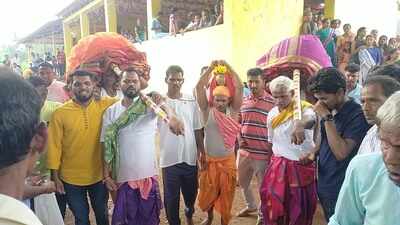
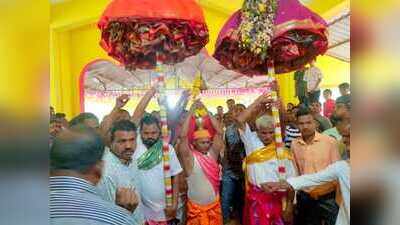

Keri: Dussehra rituals practised across Goa reflect the close relationship between local communities and the region’s agro-horticultural traditions.In Mauxi, Sattari, the festival is marked by a procession featuring the insignias of Ravalnath and Bhootnath dressed in sarees, accompanied by the pitcher of Aakari and folk music. The procession attracts a large number of devotees. People believed to be possessed by evil spirits are brought to the temple, where they are taken near the insignia of Ravalnath, the presiding deity.Sal in Bicholim was once known for its indigenous paddy varieties. As part of the Dussehra celebrations, a symbolic marriage ceremony is held between the insignias of Bhootnath and goddess Pavanai to express gratitude for procreation. The ritual is believed to have angered Ravalnath.Similar symbolic marriage ceremonies between masculine and feminine deities are held in several Goan villages during Dussehra.Dilip Desai from Sal told TOI, “The Dussehra festival has been celebrated mainly in agro-horticulture-dominated villages of Goa through symbolic marriage ceremonies between masculine and feminine entities to express gratitude for procreation. In many parts of Goa, such ceremonies are organised between feminine entities such as Bhagavati, Sateri, Pavanai and Mauli, and masculine entities such as Ravalnath and Bhootnath. The marriage signifies the utmost respect for the union of female and male entities, which is followed by procreation.”
About The Author