







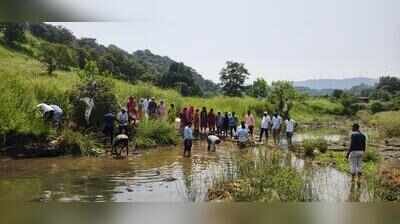
Pune: A group of teachers from the Akharwadi education cluster in Khed tehsil, one of the eight drought-affected tehsils in Pune district, have built a Vanarai bund at Papalwadi village to retain rainwater and improve groundwater recharge voluntarily.The initiative is being seen as an effort to promote water conservation through community participation, with teachers stepping beyond their regular academic responsibilities to contribute to a local environmental cause.The bund has been constructed across a stream in the village, helping hold back water that would otherwise flow downstream. The initiative was undertaken following an appeal to conserve water through the principle of ‘Paani adwa, paani jirwa’ (stop the water, allow it to percolate), promoted by Pune Zilla Parishad.Block education officer Amol Jangle of Khed tehsil said, “On Saturday, after the morning school, 20 teachers from Amboli cluster worked in the village and completed the work within a few hours. The work was initiated because Khed tehsil is also drought-affected and this village suffers water crisis in summer. Therefore, this site was selected.”The structure is expected to help increase water levels in public wells in Papalwadi and neighbouring areas, besides facilitating groundwater recharge. Retaining water locally can also help improve moisture availability in the surrounding area and support the local ecosystem.Water conservation structures such as Vanrai bunds are commonly used in rural areas to slow the flow of rainwater and encourage it to seep into the ground. Their effectiveness depends on factors such as rainfall, soil conditions, the underlying geology and the location of the structure.The bund is also expected to provide a source of water for birds and other wild animals in the area, particularly during periods when natural water sources become scarce. Such small-scale interventions can contribute to local water security while supporting biodiversity, said the officials.Jangle said that they have made a comprehensive plan on similar lines for another 35 clusters with 1,450 teachers in it. “By participating in water conservation, teachers have also demonstrated how local institutions can help spread awareness about the importance of protecting natural resources. With several villages in tehsil facing seasonal water shortages, such decentralised conservation measures can complement larger watershed development projects,” said Arvind Shinde, headmaster of one of the ZP schools in the cluster.The long-term benefits of these bunds, however, depend on regular maintenance, adequate rainfall and the adoption of similar measures across catchment areas.
About The Author