








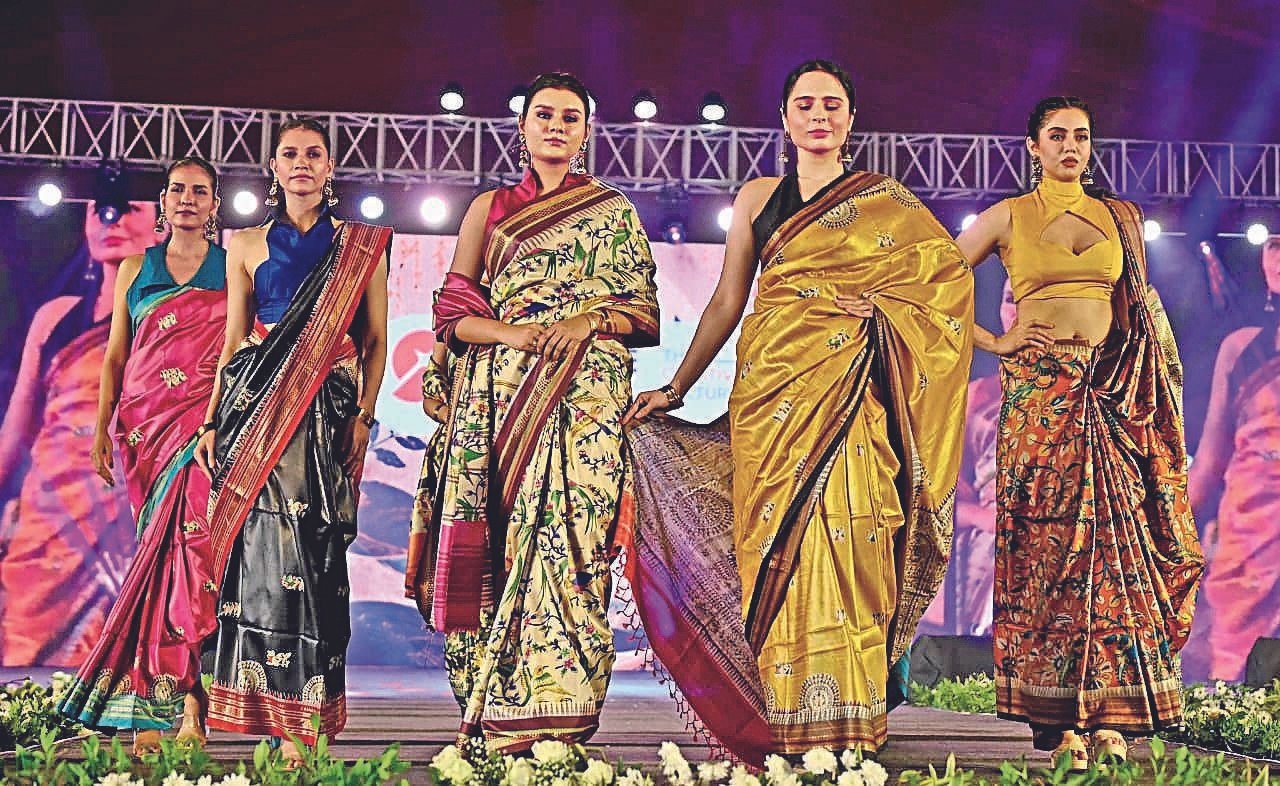
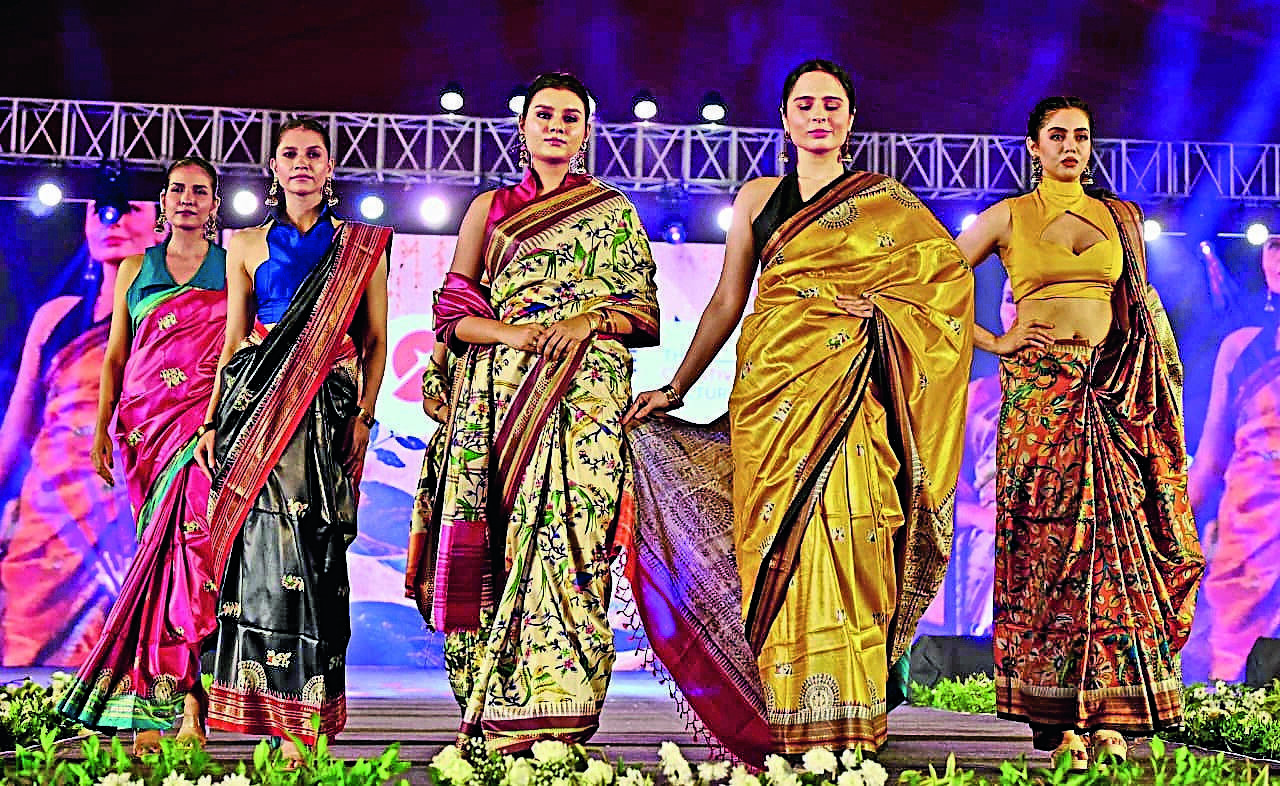
Nagpur: Union minister Nitin Gadkari aims to take Dhapewada’s traditional silk sarees to the global fashion stage, hoping to revive a dying weaving tradition of Nagpur. Speaking at the inauguration of the new building of Dhapewada Textile Producer Udyog Company Ltd on Saturday, Gadkari said the initiative began as a social enterprise involving 400 women. Union textile minister Giriraj Singh and veteran Bollywood actress and Mathura MP Hema Malini were chief guests at the event.Gadkari said the Dhapewada silk industry could provide employment to 5,000 women and establish a distinct international identity for the region’s handloom products. “My dream is to see Dhapewada silk exported across the world and showcased at Cannes in France. We want to develop it into a brand,” Gadkari said.Recalling Nagpur’s once-thriving handloom industry, Gadkari said the bustling handloom market of Gandhibagh had fallen silent, while members of the Halba community, traditionally associated with weaving, were struggling to sustain their occupation.“During Janata Party govt, we introduced schemes for sarees and dhotis and provided subsidies to cooperative societies. However, those initiatives eventually faded,” he said.Tracing the Dhapewada silk project’s beginnings to 2021, Gadkari said over the following years, the handloom company has developed the capacity to manufacture premium Tussar silk sarees. The minister added that the project is now preparing to scale up production. The enterprise has developed organic colour printing capabilities and is exploring artificial intelligence to reduce the production time of a saree from 10 days to six. Plans are also being considered to introduce dhotis, jackets and other garments, he said. Gadkari added that he wants to involve tribal communities in Gadchiroli in silk breeding and thread production.Union textiles minister Giriraj Singh said the Dhapewada initiative could emerge as a significant milestone for India’s handloom sector. Making an ambitious announcement, Singh said efforts were underway to ensure that every weaver could earn between Rs20,000 and Rs30,000 per month within a year.“After agriculture, the textile industry is among the largest employment-generating sectors in the country. Over the past 12 years, the sector has generated employment for five crore people,” Singh said.Singh also highlighted the growing role of technology in textile manufacturing, saying the ministry was collaborating with IIT Delhi to introduce real-time monitoring of production processes and integrate artificial intelligence to minimise errors and improve efficiency.Hema Malini praised the revival of Dhapewada’s textile industry and described the Karvatkathi sarees as beautiful and distinctive. “India has such a wonderful diversity of sarees and designs, and the credit goes to our talented weavers. These traditions must be preserved and promoted,” she said.Hema Malini suggested diversifying the product range beyond sarees to include salwar kameez and other contemporary garments, enabling the fabric to appeal to a wider customer base.Maharashtra textiles minister Sanjay Savkare said the fashion show was organised to popularise Dhapewada’s Karvat Kathi weaving tradition and provide greater visibility to locally manufactured sarees.
About The Author