







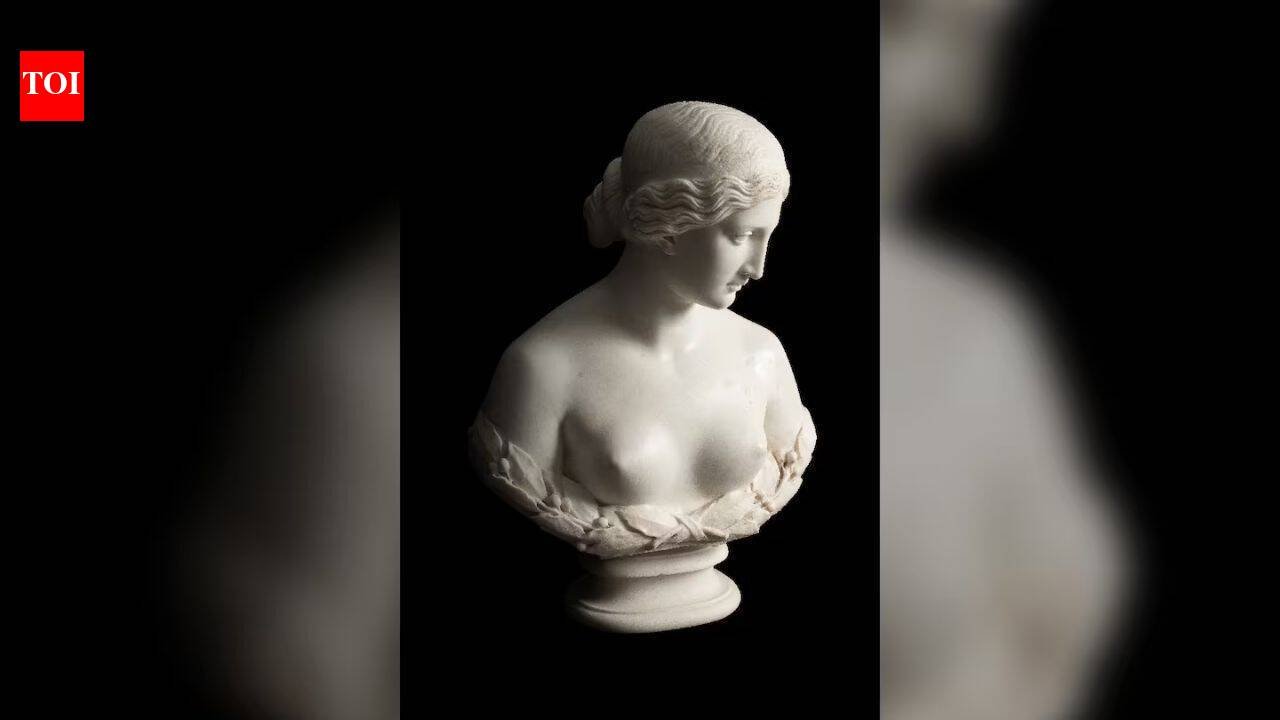
A routine house valuation in the Cotswolds has revealed that a weathered marble bust left in an English garden for more than 70 years was a rare work by Harriet Goodhue Hosmer, widely regarded as America’s first professional female sculptor. The 1854 sculpture, depicting the Greek mythological figure Daphne, had been treated as an ordinary garden ornament and was covered with lichen. Its discovery has brought renewed attention to one of Hosmer’s earliest works, of which only a small number of marble versions are known to survive.
The rare marble bust remained unrecognised for over 70 years
The sculpture was found during a routine house valuation in the Cotswolds by Thomas Jenner-Fust, director of Chorley’s Auctioneers. According to the BBC, the bust had spent more than seven decades outside and had become so familiar to the family that its real significance went unnoticed.The owners believed they had a reconstituted stone garden bust rather than an important 19th-century artwork. Covered in moss and lichen, it did little to suggest that it was carved from valuable marble. Jenner-Fust recognised that there was more to the object during his inspection and began examining it more closely.The discovery was particularly striking because the sculpture was not merely an old decorative piece. It was identified as a work by Harriet Goodhue Hosmer, an American artist whose career challenged the expectations placed on women in the 19th century. The BBC reports that Hosmer is widely regarded as the first professional female sculptor in the United States.
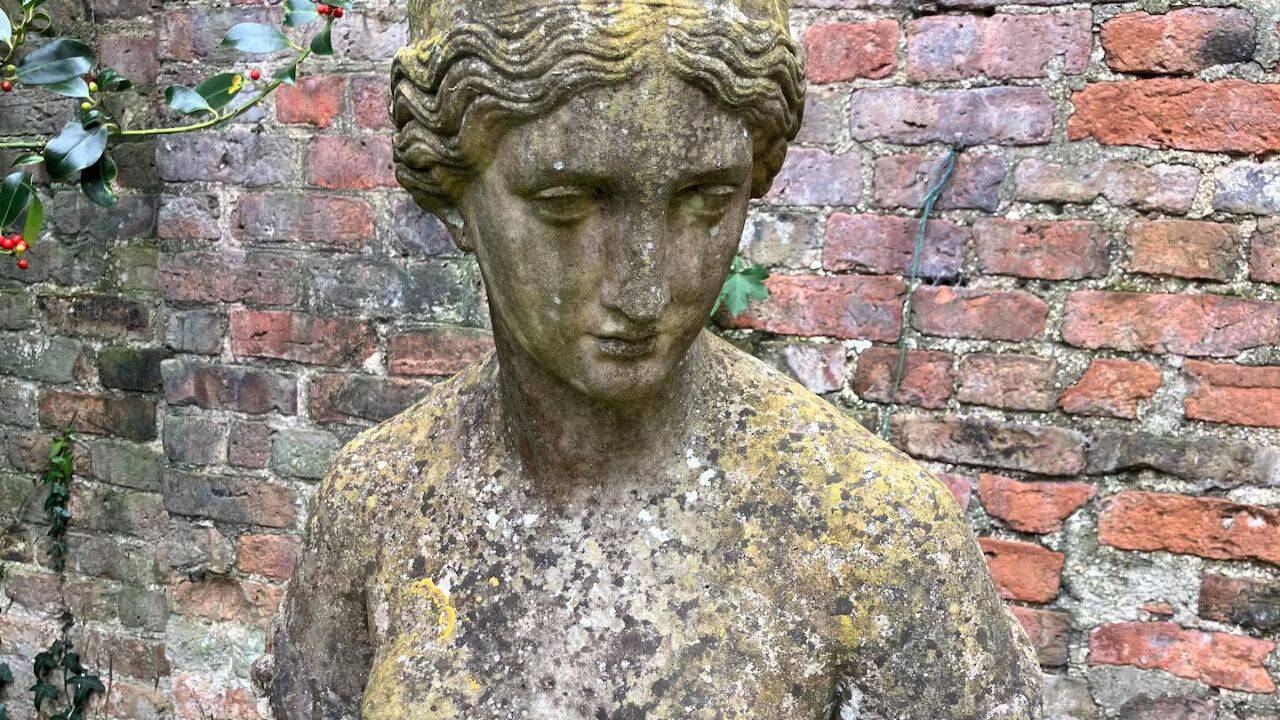
The bust was found in a home in Cotswolds, a region in rural south central England, where it had stood as a garden ornament for 70 years. Image Credit: Chorley’s Auctioneers/CP24
What does the sculpture depict
The bust represents Daphne, a figure from Greek mythology who was pursued by Apollo. In the story, Daphne rejected the idea of marriage and sought protection from her father, who transformed her into a laurel tree. Hosmer captured the character at the point of this transformation.The Metropolitan Museum of Art provides important context for Hosmer’s treatment of Daphne through its own marble version of the subject. Its collection records that Hosmer carved Daphne in 1854, after designing the work in 1853. The Met version shows the bust ending in laurel branches, referring directly to Daphne’s transformation. The museum also notes that the subject had a personal resonance for Hosmer, who rejected traditional expectations surrounding women and relationships.The newly identified English bust carries another important clue to its origin. An inscription on the back includes Hosmer’s name and the Latin phrase me fecit Romae, meaning that she made it in Rome. The BBC reported that the inscription, together with the quality of the carving and the laurel leaves at the base, helped establish the sculpture as an authentic Hosmer work.
Harriet Hosmer was important in her time
Hosmer was born in Massachusetts in 1830 and built much of her professional life in Rome. During the 19th century, sculpture was overwhelmingly dominated by men, making her success particularly unique.The BBC describes Hosmer as a pioneering artist and feminist figure who developed an international reputation while working in a male-dominated profession. She was also openly gay at a time when same-sex relationships were widely condemned and, in some places, illegal.OnlyGoodNewsDaily describes Hosmer as a celebrated artist and feminist icon, noting that she spent a significant part of her early career in Italy among a circle of women sculptors. The publication also highlights how unusual it was for women to pursue professional artistic careers during the period.Her career therefore gives the garden discovery a significance beyond its financial value. The bust is evidence of the work of a woman who established herself internationally at a time when women faced considerable barriers to doing so.
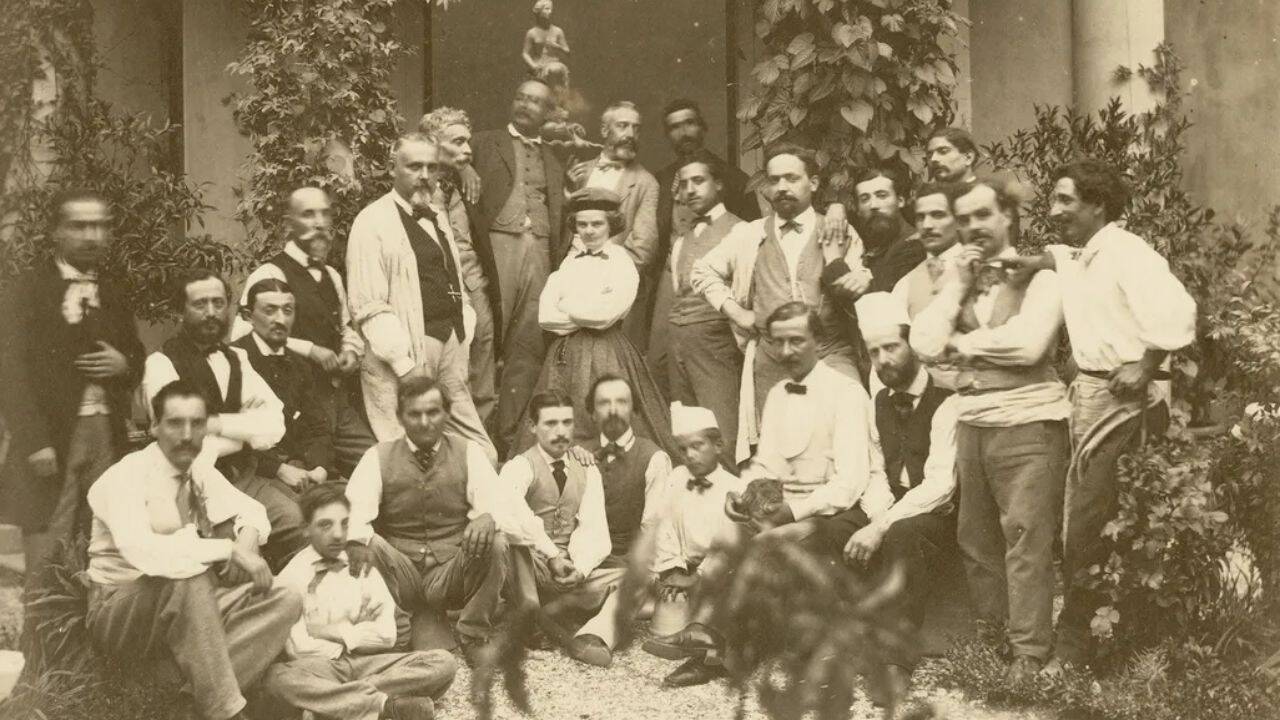
Harriet Goodhue Hosmer, center, with her assistants and carvers in her studio in Rome in 1867. Image Credit: Wikimedia Commons
How rare is the garden sculpture
The scarcity of Hosmer’s Daphne makes the discovery especially notable. Historians at the Metropolitan Museum of Art recognise only 3 verified marble versions surviving today, with those examples held by museums in the United States.The Met itself has one of these versions. Its collection identifies the work as Daphne, made by Harriet Goodhue Hosmer, with the sculpture carved in marble and dated to 1853, carved 1854. The museum records its dimensions as about 69.9 centimetres high, 49.8 centimetres wide and 31.8 centimetres deep.That context helps explain why the identification of another version in an English garden was so unexpected. What had looked like an ageing outdoor ornament turned out to belong to a very small group of surviving works connected to Hosmer’s early career.
What happened after the sculpture was identified
Once its importance became clear, the bust was acquired by Chorley’s Auctioneers in Gloucester. The BBC reported that it was expected to fetch as much as £18,000 when offered for sale.The sculpture was subsequently put up for auction in September, although later reporting stated that it did not sell. A further sale was planned, keeping the newly identified work in the spotlight.The history of the bust before its discovery remains uncertain. According to the BBC, the family believed an ancestor had bought it at auction during the mid-20th century. Black-and-white photographs from the 1950s also showed the sculpture already standing in the garden, providing evidence that it had been part of the property’s landscape for decades.The discovery brings a little-known chapter of American art history into view. Hosmer’s work survived decades of exposure in an English garden before its identity was recognised, while her other versions of Daphne now sit within museum collections.
About The Author